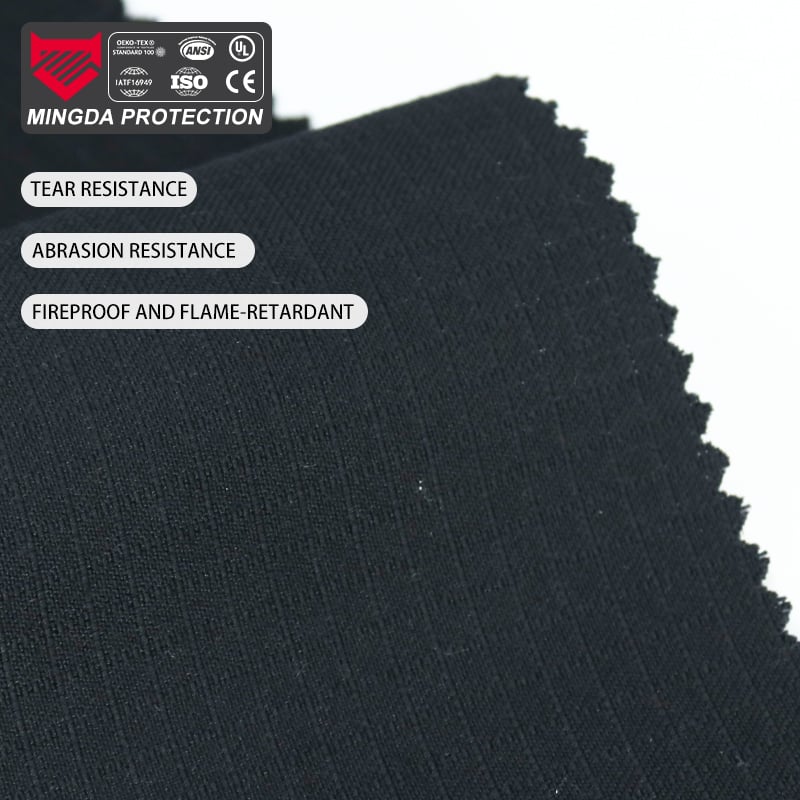
Flame-retardant base layers and underwear
Knit constructions next to the skin, where softness, moisture handling and a non-melting fibre matter more than tensile strength.
Modacrylic and modacrylic / cotton yarn · Ne 16s – Ne 60s · Protex-F antimony-free fibre available
Our modacrylic yarn family: the inherently flame-resistant acrylic fibre that dyes easily, feels soft next to the skin and can be blended with cotton, viscose or aramid for the comfort layer of a flame-retardant garment. Supplied in single, two-ply and multi-ply counts, with an antimony-free fibre option.
The material
Modacrylic is a modified acrylic: the polymer is built from acrylonitrile copolymerised with monomers that contain halogen, and that copolymerisation is what makes the fibre inherently flame resistant. The flame resistance is part of the polymer chain, not a finish applied after spinning, so it does not wash out. Put the fibre in a flame and it self-extinguishes once the ignition source is removed, and it does not melt or drip — it chars and shrinks away, which is why it is a natural choice for a garment worn next to the body rather than only for an outer shell.
Its limiting oxygen index is 27–34, above the 21% oxygen in ordinary air, and its continuous working temperature is around 150–180 °C — a lower ceiling than aramid, which is the trade a modacrylic blend makes in return for comfort and colour. Where a programme needs both a high radiant-heat or molten-metal performance and comfort, the answer is usually a blend or a layered construction rather than one fibre doing everything.
Hand and moisture behaviour are where modacrylic separates itself from aramid in daily wear. The fibre is soft, it has a wool-like bulk, and its moisture regain of 1.5–2% combined with a smooth surface means a garment built from it feels less harsh and less clammy than a 100% aramid knit of the same weight. That is why modacrylic and modacrylic/cotton yarns sit in the layer against the wearer, in underwear, base layers and light workwear, while aramid takes the outer shell.
Dyeability is the other half of the story. Modacrylic dyes easily and takes bright, saturated shades — which is what makes high-visibility and colour-coded flame-retardant garments practical in this fibre, and what makes it possible to match a corporate uniform colour without a special fibre run. One formulation point is worth stating plainly: some modacrylic fibres are produced with antimony as part of the flame-retardant chemistry, and antimony is restricted in several apparel programmes. Our antimony-free Protex-F yarn exists for exactly that reason, and it is the grade to specify when the buyer screens for restricted substances.
How it is made
We spin our modacrylic yarn with two ring-spinning variants — Siro-spun and compact Siro-spun. Both start from drafted staple fibre, and both attack the same weakness: a spun yarn is only as good as the fibres held inside its body, because every fibre end left on the surface is a defect that shows up as pilling, a rougher surface and faster abrasion.
In conventional ring spinning a single drafted strand is twisted into yarn, and the twist runs back into a triangular zone — the spinning triangle — where outer fibres can escape before they are bound in. Siro-spun feeds two rovings side by side through the same drafting zone and the same spinning triangle, so the two strands twist around each other as they form. The yarn that comes out is wrapped rather than combed: fewer fibre ends protrude, and the linear density is more even along the length of the yarn.
Compact Siro-spun adds a compacting stage before twisting. A suction or air current draws the fibre ends back into the yarn body and removes the spinning triangle altogether, so nearly every fibre is trapped inside the structure instead of lying loose on the surface. In practice that gives the tightest surface, the highest yarn tenacity of the two routes and the best evenness — the route we use where the yarn will be knitted or woven into a fabric whose appearance and abrasion life matter.
In a modacrylic/cotton blend the spinning route matters more than in a single-fibre yarn, because two fibres of different length, fineness and surface behave differently in the drafting zone. A cleaner drafted strand means the two components stay evenly mixed instead of separating into thick and thin places, which is what gives the finished fabric an even surface, even colour take-up and even pilling behaviour. Yarn properties are measured per production lot, so ask our technical team for the current spinning data for the count and blend you plan to use.
| Spinning route | How the yarn is formed | What it gives the fabric |
|---|---|---|
| Conventional ring-spun | One drafted roving twisted into a yarn; the spinning triangle stays open. | The baseline: usable, but hairier and less even, so the fabric surface is rougher and wears faster. |
| Siro-spun | Two rovings drafted and twisted together in the same spinning triangle, then plied. | Lower hairiness and better evenness than ring-spun; fewer protruding fibre ends on the woven or knitted surface. |
| Compact Siro-spun | As Siro-spun, with a compacting stage that pulls loose fibre ends back into the yarn body before twisting. | The tightest surface, the highest tenacity and the best evenness of the three — our route for appearance-critical fabric. |
Every figure below is a value our own mill recorded in the test report for the product named beside it, quoted as recorded. Modacrylic is a comfort and colour fibre rather than a load-bearing one, so its tenacity sits well below the aramid range, and the numbers on this table should be read against that purpose rather than against a strength fibre.
What the measured data shows is a fibre that is consistent rather than strong: on the models tested, breaking tenacity runs 12.5–16.7 cN/tex, elongation at break 11.12–21.49%, and evenness 10.67–14.77% CVm, with the best single result in each row named beside the range. Blends with cotton sit at the lower end of the strength range and the higher end of the elongation range, which is what a cotton blend is expected to do.
All values are measured per production lot, so the figures here describe what our yarn is delivering now rather than a guaranteed ceiling. Tell our technical team the count, blend and colour route you plan to use and we will send the batch test data for it.
| Property | Our measured range | Best recorded value | Source |
|---|---|---|---|
| Breaking tenacity (cN/tex) | 12.5 – 16.7 | 16.7 (100% Protex-C, Ne 30s) | 100%Protex-C 30S.xlsx |
| Breaking force (cN) | 329 – 386 | 386 (modacrylic / cotton, Ne 19s) | H11191 SK.xlsx |
| Elongation at break (%) | 11.12 – 21.49 | 21.49 (100% Protex-C, Ne 30s, dyed black) | 100%Protex-C 30S (dyed black).xlsx |
| Evenness CVm% | 10.67 – 14.77 | 10.67 (modacrylic / cotton, Ne 19s) | H11191 SK.xlsx |
| Twist (T/10cm) | 61.3 – 85 | 85 (100% Protex-C, Ne 30s) | 100%Protex-C 30S.xlsx |
Technical data
The modacrylic yarns we produce, model by model. The two fabric grades at the bottom of the table are the yarns behind our EN ISO 11612 test summaries, tested at 180 g/m² and 250 g/m².
| Model | Composition | Count | Ply / construction | Rating or key property | Source |
|---|---|---|---|---|---|
| AC402 | 55% modacrylic + 45% cotton | Ne 40s | Two-ply | On request | Index |
| PT32S | Modacrylic + cotton (60 / 40) | Ne 32s | Single | Twist 450 t/m; OEKO-TEX | Index |
| Protex-F antimony-free yarn | Protex-F modacrylic + cotton | Ne 16s – Ne 60s | Single | Antimony-free; OEKO-TEX® STANDARD 100 | Index |
| Protex-C 30s | 100% modacrylic (Protex-C) | Ne 30s | Single | Breaking tenacity 16.7 cN/tex; evenness 14.62% CVm | 100%Protex-C 30S.xlsx |
| Protex-C 30s (dyed black) | 100% modacrylic (Protex-C) | Ne 30s | Single | Breaking tenacity 15.7 cN/tex; elongation 21.49% | 100%Protex-C 30S (dyed black).xlsx |
| H11191 SK | 60% modacrylic + 40% cotton | Ne 19s | Single | Breaking tenacity 12.5 cN/tex; breaking force 386 cN | H11191 SK.xlsx |
| MCS180NB | Modacrylic / cotton / antistatic | On request | On request | EN ISO 11612 tested on the 180 g/m² fabric built on this yarn | Index · EN 11612 test summary |
| MCS250HY | Modacrylic / cotton / antistatic | On request | On request | EN ISO 11612 tested on the 250 g/m² fabric built on this yarn | Index · EN 11612 test summary |
The Source column names where each figure comes from: Index is our product information index, the other entries are the specification sheet issued for that product. Protex-F is the antimony-free fibre brand we spin; other entries name the fibre grade as recorded. Values are measured per production lot — ask our technical team for the batch data of the count, blend and colour route you plan to use.
Made to order
Modacrylic dyes easily, so colour is the flexible part; count, ply and blend are set to the garment the yarn is going into.
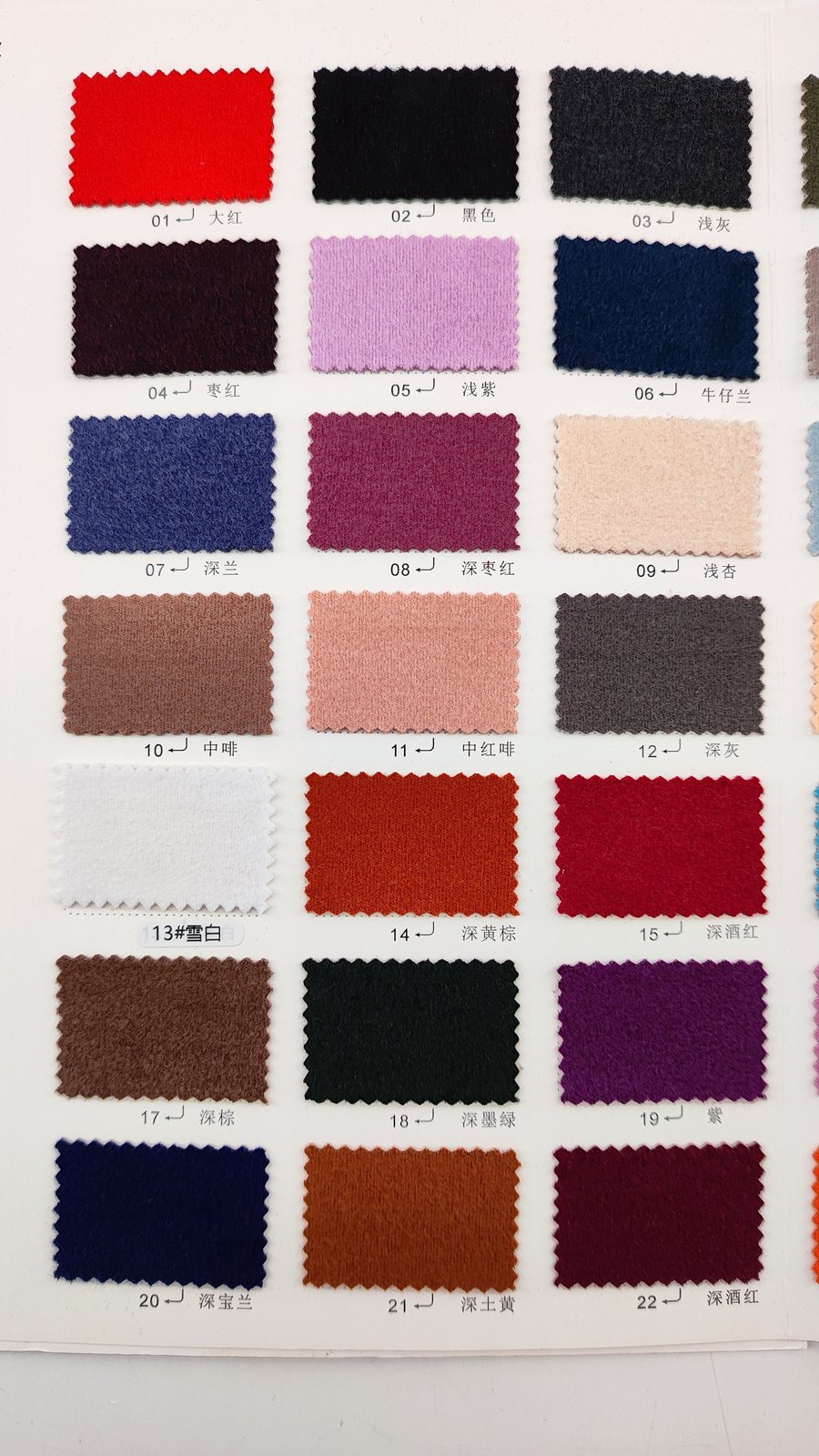
Modacrylic is the easiest of our flame-resistant fibres to dye, which is why the shade range is wide and why high-visibility and colour-coded garments are practical in it. The shades above are the regular ones; further colours can be dyed to an approved reference, and a shade can be matched across repeat orders rather than being limited to a catalogue card.
Our products are made to conform to each standard listed below, in the application it is bought for. Where a certificate for a specific standard is required, we arrange testing to the customer's requirement.
Test reports and certificate copies are available from our sales team on request. Standards written for finished garments — EN ISO 11612, NFPA 2112, NFPA 1971 — belong to the garment maker who builds on our material data.
In service
Modacrylic yarn is bought by mills that knit or weave it into the comfort side of a flame-retardant programme: the layer against the wearer, and the light and high-visibility garments where colour and softness decide whether the protection is actually worn. The yarn is also spun into the FR knitwear and fleece that sit under a heavier shell.
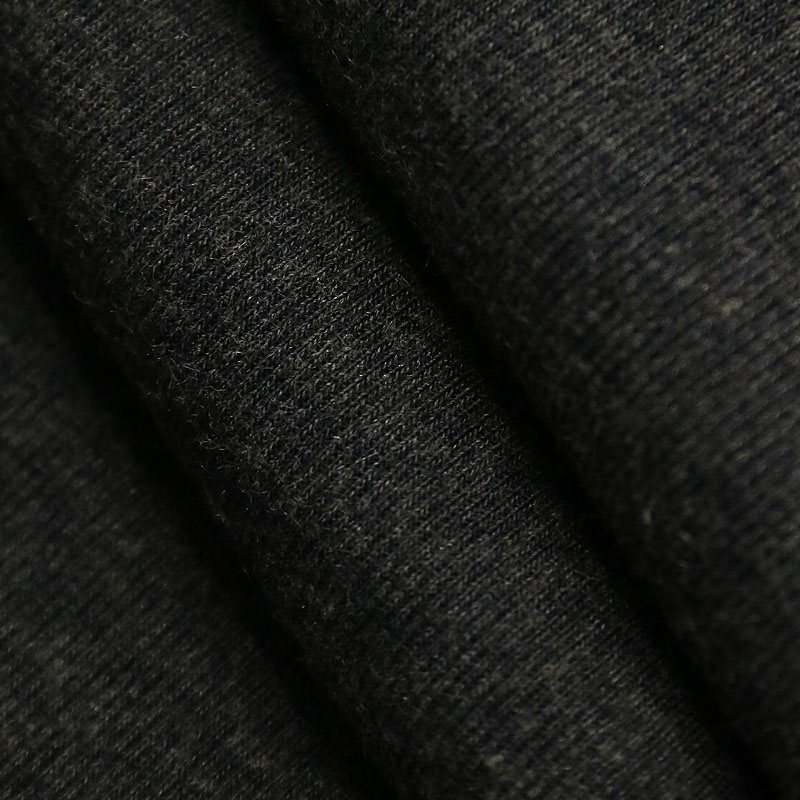
Knit constructions next to the skin, where softness, moisture handling and a non-melting fibre matter more than tensile strength.
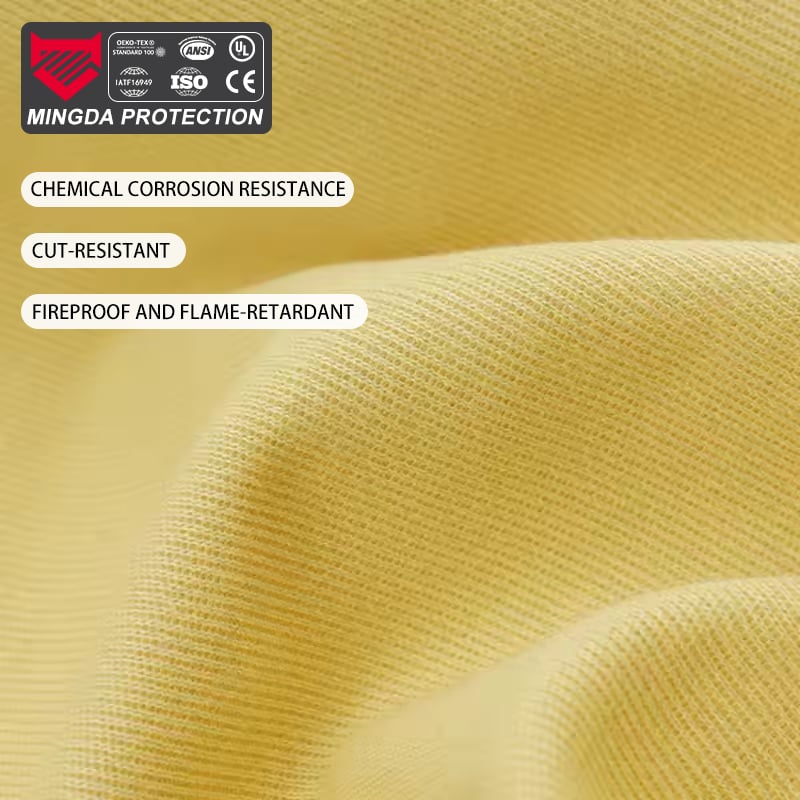
Bright and fluorescent shades are practical in modacrylic, so the same fibre carries the visibility requirement and the flame resistance in one garment.
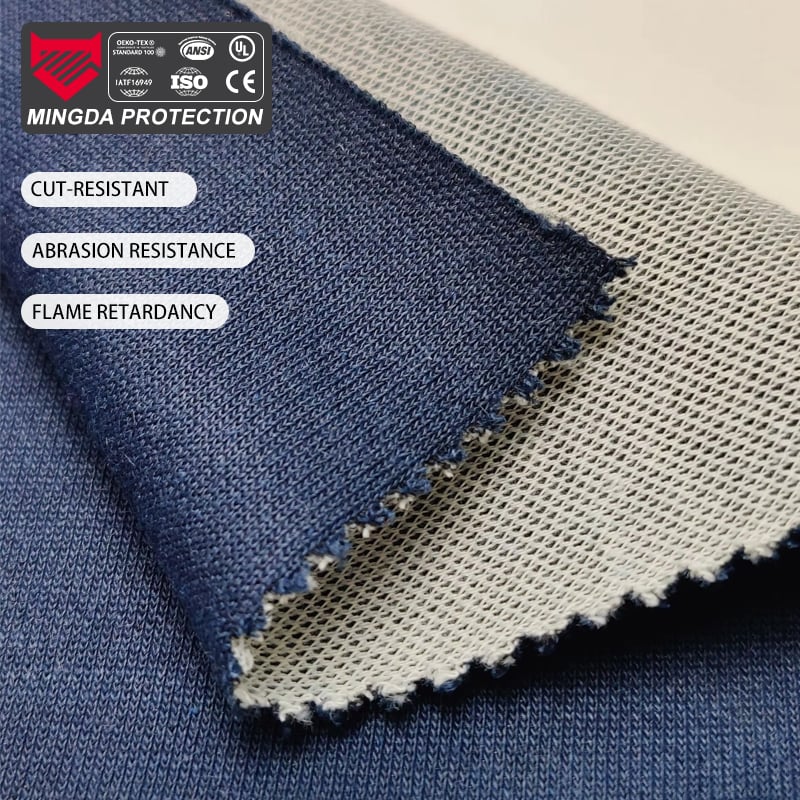
Rib, interlock, fleece and waffle structures for the under-shell layer of a multi-layer protective assembly, worn through a full shift.
Yes. The flame resistance comes from the polymer itself — acrylonitrile copolymerised with halogen-containing monomers — not from a finish applied after spinning, so laundering and abrasion cannot remove it. Its limiting oxygen index is 27–34, well above the 21% oxygen in air, so the yarn self-extinguishes once the ignition source is removed. It does not melt or drip either: the fibre chars and shrinks away, which is why it is suitable for a garment worn against the skin.
Antimony is used as part of the flame-retardant chemistry in some modacrylic fibres, and antimony compounds are restricted in a number of apparel and consumer-goods programmes. Antimony-free modacrylic reaches its flame resistance without that chemistry, so it is the grade to specify when the buyer screens the garment for restricted substances or is working to OEKO-TEX and similar schemes. Our Protex-F modacrylic is the antimony-free grade we spin.
They solve different problems. Modacrylic is softer, drapes better, has a higher moisture regain relative to its hand, and dyes easily — so it is the fibre for the layer against the wearer, for knitwear and fleece, and for bright or high-visibility shades. Aramid is stronger, more heat stable and non-melting at higher temperatures, so it takes the outer shell and the structural layers. Most protective garments use both, and many modacrylic yarns are blended with aramid or FR viscose to combine the two behaviours in one fabric.
Yes, and it is a common way to balance comfort against heat performance. Blending aramid into a modacrylic yarn raises the temperature the assembly can take and improves tear strength; blending modacrylic into an aramid construction softens the hand and improves the way the garment wears. The right ratio depends on which property is limiting your specification, and it is set at the spinning stage for a yarn or at the fabric stage for a blend of two yarns.
Around 150–180 °C continuously, which is lower than aramid. That ceiling is the trade the fibre makes in return for softness, dyeability and a non-melting char. Where a fabric has to hold shape and strength at higher temperature, an aramid layer or a multi-layer construction is the answer rather than a heavier modacrylic.
It does not melt or drip. Exposed to a flame, modacrylic chars and shrinks away from the heat source, and it self-extinguishes once the ignition source is removed because its limiting oxygen index of 27–34 is well above the 21% oxygen in air. That non-melting behaviour is the reason a modacrylic garment is used against the skin: there is no molten polymer to stick to the wearer, which is the hazard that makes melting fibres dangerous in a protective garment.
100% modacrylic gives the highest flame resistance per unit weight, dyes to the brightest shades and feels softest, but it is the weaker and more expensive option. Blending in cotton lowers the cost and adds the familiar handle of a cotton garment at the price of a lower limiting oxygen index and a slower self-extinguishing behaviour, which is why blend ratios are set against the standard the garment has to pass. Our own measured modacrylic/cotton yarn (60/40, Ne 19s) records 12.5 cN/tex tenacity and 10.67% CVm evenness.
Flame and heat performance belongs to the finished fabric or garment, not to the yarn on the cone, so it is established by testing the construction you actually build. For our modacrylic/cotton and antistatic fabric grades we hold EN ISO 11612 test summaries at 180 g/m² and 250 g/m², which cover flame spread, convective heat, radiant heat and, on the heavier grade, molten metal splash and contact heat. Where a certificate for a specific standard is required for your own construction, we arrange testing to your requirement.
Tell us the application, the required weight and the standard you need to meet. Our technical team will come back with a matching fabric, the spec sheet and a quotation.