Meta-aramid reinforcement fabric for automotive hose
100% meta-aramid (aramid 1313) base cloth and mesh · Para-aramid (aramid 1414) filament for knitted and braided reinforcement · Made to the hose maker’s weight, width and construction
Base cloth, mesh and knitted or braided filament reinforcement for high-temperature automotive hose. We make the reinforcement layer that goes inside the silicone, EPDM and oil-line hose your plant builds.
- Base cloth, mesh and para-aramid filament from one mill
- Developed for dipping and calendering with high-temperature rubber
- Made to order: weight, width, mesh and structure set to your line
The material
The reinforcement layer inside a high-temperature hose
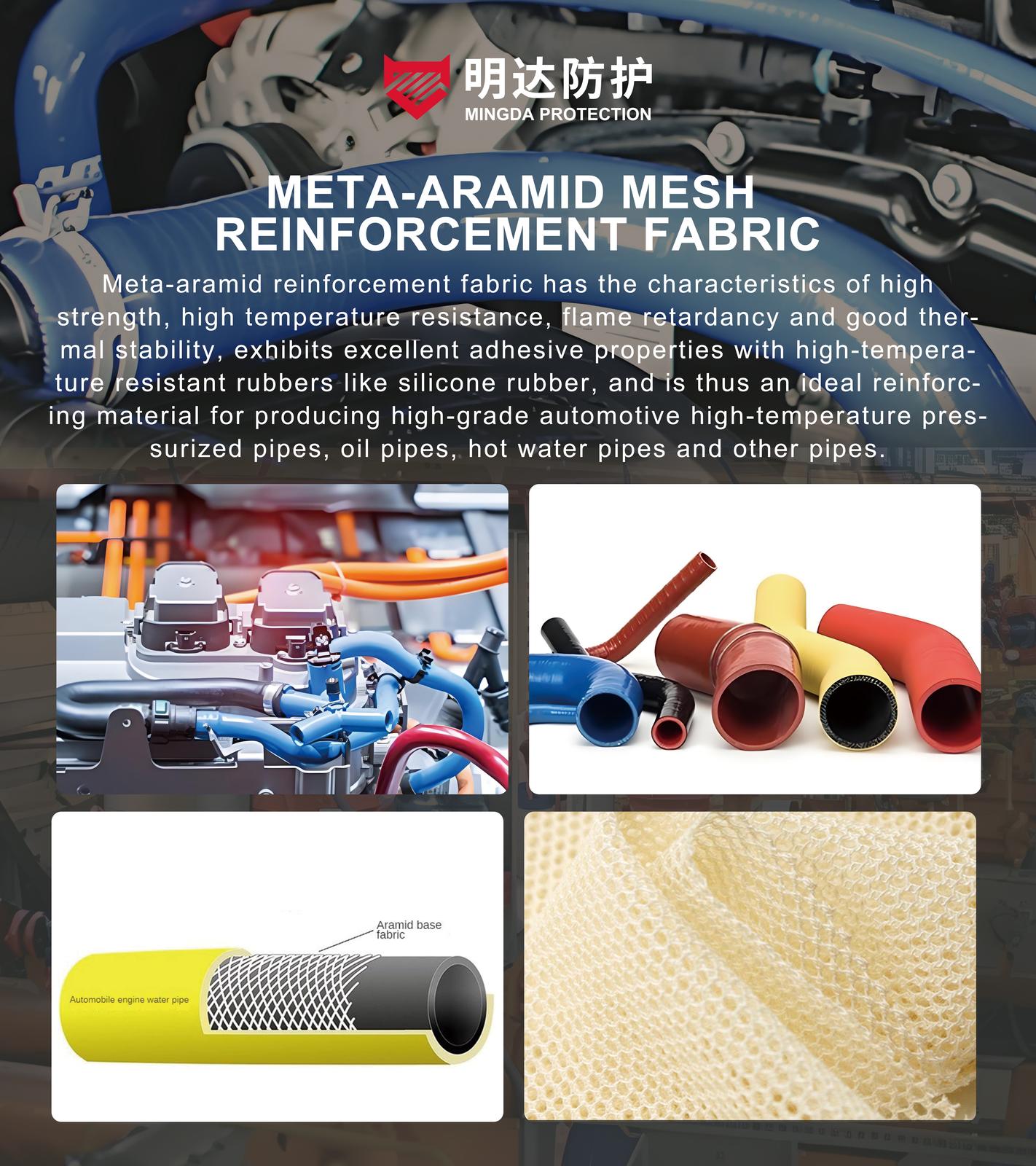
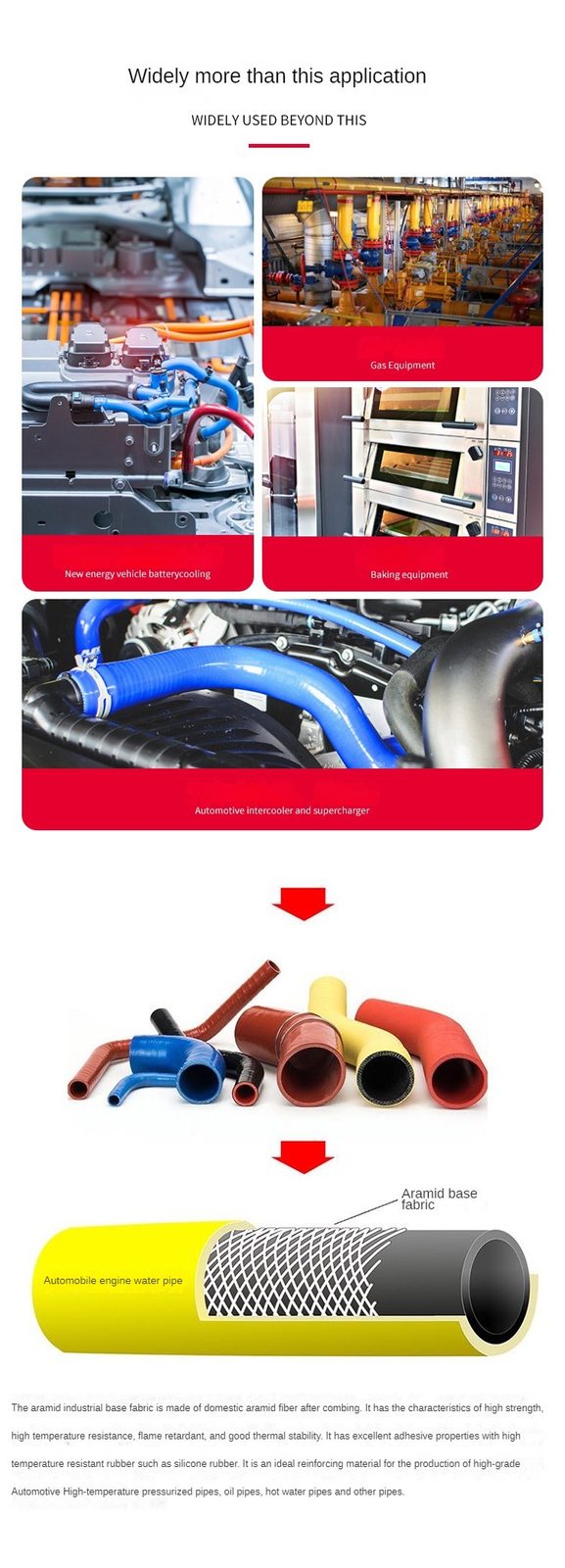
Meta-aramid (aramid 1313) base cloth and mesh are bought for one job: to hold a rubber hose together while it carries hot fluid under pressure. The fibre gives the layer high strength, high temperature resistance, flame retardancy and good thermal stability, and — the property the dipping line actually depends on — it develops excellent adhesion with high-temperature-resistant rubbers such as silicone rubber. That combination is what makes it the standard reinforcement for high-grade automotive high-temperature pressurised pipe, oil pipe and hot water pipe.
The reinforcement layer is not only cloth. Aramid 1414 (para-aramid) filament yarn is twisted and then knitted or braided into a sleeve — the plain-knit, lock-stitch and braided structures used where the layer has to carry tensile load rather than simply hold a shape. The two routes do different work: the 1313 base cloth or mesh is the layer that is dipped, calendered and wrapped or laid into the hose wall; the 1414 filament sleeve takes the pressure and impulse load. Both are made here, so a hose plant can source the whole reinforcement layer from one supplier instead of matching two.
Structure follows duty. In wrapped-cloth hose the calendered fabric is cut at 45°, spliced and wrapped over the mandrel as two to five layers — simple and tolerant of any specification, with a stiff, dimensionally stable wall. A braided sleeve is interlaced at the balanced angle, which gives good pressure and flex performance with better material utilisation. Wound hose builds the same filaments as a spiral, and knitted hose lays a single light layer for the lines that mostly have to bend. Our base cloth, mesh and filament are supplied to whichever of these builds your plant runs.
The rubber decides the rest of the picture. Silicone (VMQ) and EPDM carry coolant and charge-air circuits, fluororubber and epichlorohydrin blends handle fuel and vapour, and acrylic and chlorosulfonated rubbers take oil cooling. The cure cycle for silicone hose is a high-temperature step, which is exactly why the reinforcement is chosen for heat stability rather than price: the cloth has to survive the process and still be bonded when it comes out.
Who makes it
Why hose makers buy the reinforcement layer from us
Our textile roots go back to 1972 and the company was established in Shantou, Guangdong in 2002. Today the base cloth and mesh on this page are made in a 30,000 m² integrated spinning and knitting plant, so the meta-aramid yarn in the cloth and the para-aramid filament in the sleeve are spun and converted under one roof rather than bought in and resold.
That integration is what the hose industry is buying. Annual output is more than 1,000 tons of aramid, Modacrylic and HPPE yarn and more than 500 tons of protective fabric. Weight, width, mesh and structure are made to order instead of being stocked in a fixed range, so a hose plant can set the reinforcement to its dipping line and mandrel instead of designing around a catalogue.
We supply the reinforcement layer to automotive hose manufacturers in China and to hose plants building for export programmes. Because the fibre is spun and woven in the same plant, the composition is known at the yarn stage and any batch can be traced back to the test report for its production lot.
More than 60%
of the domestic Chinese market for base cloth used in automotive silicone hose.
The figure is stated on that market and that market only — the domestic Chinese market for base cloth used in automotive silicone hose. It is not a global market share and it is not stated for any other product line.
Hose makers we supply include:
-
 Zhejiang Fengmao Technology Co., Ltd.
-
 Beijing Tianyuan Aote Rubber and Plastic Co., Ltd.
-
 Zhejiang Iron Horse Technology Co., Ltd.
-
 Tianjin Pengling Group Co., Ltd.
-
 Shandong Meichen Technology Group Co., Ltd.
Company names and logos are the trademarks of their respective owners. They are shown here only to identify these companies as hose makers we supply; the display does not mean that they endorse, approve, certify or recommend this product.
Technical data
Product information
The meta-aramid base cloth and mesh we produce for hose reinforcement, model by model, plus the para-aramid filament that goes into knitted and braided sleeves. Every figure names its source.
| Model | Composition | Weight | Construction / width | Rating or key property | Source |
|---|---|---|---|---|---|
| J-WPM90-90 | 100% meta-aramid (aramid 1313) | 90 g/m² | Woven, 90 cm | On request | Index |
| J-WPM120-90 | 100% meta-aramid (aramid 1313) | 120 g/m² | Woven, 90 cm | On request | Index |
| J-WPM135-90 | 100% meta-aramid (aramid 1313) | 135 g/m² | Woven, 90 cm | On request | Index; test report J-WPM135-90.xlsx |
| MD-W011-3 | 100% meta-aramid (aramid 1313) | 160 g/m² | Woven / mesh, silicone reinforcement, 100 cm | Silicone reinforcement base cloth | Index |
| F-WTM165-145 | 100% meta-aramid (aramid 1313) | 165 g/m² | Woven, 145 cm | Reflective-tape base cloth | Index |
Meta-aramid base cloth and mesh for hose reinforcement
| Model | Composition | Count | Construction | Rating or key property | Source |
|---|---|---|---|---|---|
| Para-aramid filament yarn | 100% para-aramid (aramid 1414) | 200D / 400D / 600D / 800D / 1000D / 1200D / 1500D / 2500D / 3000D | Twisted yarn for plain-knit, lock-stitch and braided reinforcement | MD-P200D: 216 Dtex / 133F / 43.7 cN; 20.23 cN/tex | Index; 出厂检测报告 529S 200D.pdf / 1000D 529S.pdf / 1500D 529S.pdf |
Para-aramid filament yarn for knitted and braided hose reinforcement
The Source column names where each figure comes from: Index is our product information index. The models listed are the reinforcement fabrics the index covers for this application. Weight and width are the recorded values, not a preferred range — the made-to-order range is on the specification options below. Where our records hold no rating for a construction we write On request rather than an estimate.
Made to order
Specification options
Weight and width are the two specifications hose makers change most often, so they lead the list. Everything here is made to order against your dipping line and mandrel.
- Natural (undyed)
- Black
- Navy blue
- Grey
Natural, undyed cloth is the standard supply for silicone dipping, because the bonding step is sensitive to what is on the fibre. Meta-aramid is a dyeable aramid, so the dyed shades above are available where the finish suits your bonding process — tell us the rubber and the cure cycle and we will confirm the right base.
Standards and certification
Our base cloth, mesh and filament are made to conform to the application standards listed below, in the hose line each one is bought for. Where a certificate for a specific standard is required, we arrange testing to the customer's requirement.
- OEKO-TEX® STANDARD 100 Textiles tested for harmful substances.
- ISO 9001 Quality management system.
- IATF 16949 Automotive quality management system, held by the plant that makes this material.
- Ford / Ford-E Ford's own rubber hose specification system, still called up by hose programmes worldwide.
- GM / GM-E General Motors' hose specification system.
- Daimler-Chrysler Daimler-Chrysler hose specification system.
- VW / TL Volkswagen technical delivery specification system for hose.
- ISO International rubber hose standards, used where no OEM system is called up.
- JASO Japanese automotive standards for hose.
- GB Chinese national standards for hose.
- HG Chinese ministry standards for rubber and hose.
The material data sheet and the test report for each production lot are issued with the sales documents for your order. Standards written for the finished hose — the OEM systems above — are met by the hose maker who builds on this material.
Frequently asked questions
Why reinforce a hose with aramid rather than polyester?
Polyester is the cost-effective reinforcement for lines where heat and pressure stay low, and it is widely used. Aramid is chosen where the hose runs hot: meta-aramid does not melt, it keeps its properties to about 250 °C continuously and only decomposes above 370 °C, so the reinforcement keeps holding the wall through the cure cycle and through service. Polyester softens, melts and hydrolyses in hot water and steam, which is why it is not the choice for charge-air, coolant and hot-water lines that see continuous heat.
What is the difference between the meta-aramid 1313 base cloth and the para-aramid 1414 filament in a hose?
They do two different jobs in the same wall. Aramid 1313 (meta-aramid) is spun into a staple yarn and woven into the base cloth or mesh that is dipped in rubber and wrapped or laid into the hose — it provides the heat resistance, the flame resistance and the adhesion surface. Aramid 1414 (para-aramid) is a high-tenacity filament, twisted and then knitted or braided into a sleeve that carries the tensile and impulse load, at roughly five times the strength of steel by weight. We make both, which means the whole reinforcement layer can be specified from one place.
Which reinforcement structure suits which duty — wrapped cloth, braided, wound or knitted?
Wrapped cloth hose is built from calendered fabric cut at 45°, spliced and wrapped in two to five layers: the process is simple, tolerates a wide specification range and gives a stiff, dimensionally stable wall. A braided sleeve is interlaced at the balanced angle and gives good pressure and flex performance with better material utilisation. Wound hose builds the same filaments as a spiral for high burst strength and impulse resistance at high productivity. Knitted hose lays a single light layer that bends easily, and is used where working pressure is moderate. The choice follows the pressure, the bend radius and the heat of the line, not the price of the fibre.
How hot does the reinforcement get during cure, and does the cloth survive it?
Silicone hose is cured at a high temperature, and the reinforcement has to come out of that step unchanged and still bonded. Meta-aramid is used continuously at around 250 °C and only begins to decompose above 370 °C, so the cure cycle sits well inside the fibre's working range; because the fibre does not melt, there is no softening or flow at the temperature. It also holds its mechanical and electrical properties through repeated heat cycles, which is why the same fibre is used in heat-barrier textiles.
How is adhesion to silicone rubber achieved and controlled?
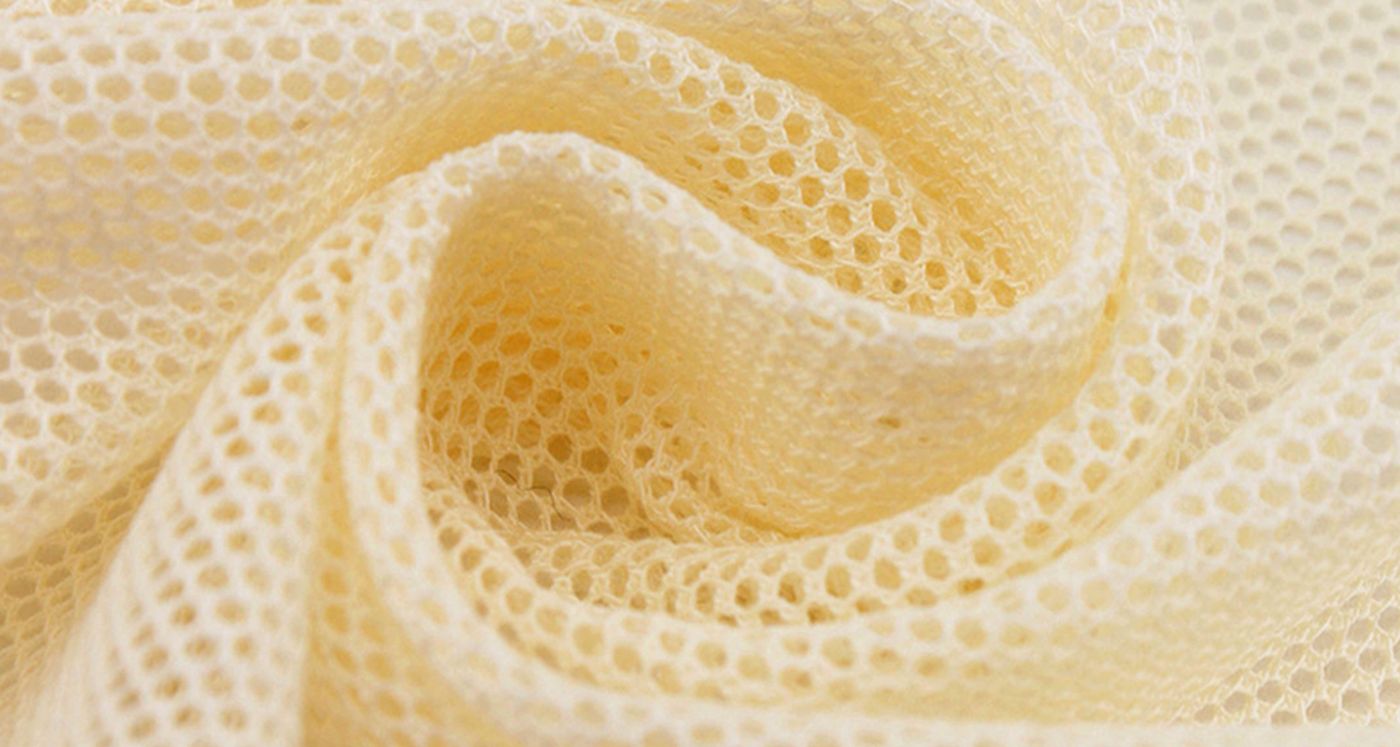
Adhesion comes from the cloth wetting out and the rubber curing around every yarn, which is why our mesh base cloth is built with an open structure and an even, uniform surface. Meta-aramid develops excellent adhesion with high-temperature-resistant rubbers such as silicone rubber, and the bond is set by the dipping recipe, the calendering pressure and the cure cycle, so all three are set with the relevant rubber in mind. Tell us the elastomer and the process and we will confirm the base cloth and the finish that suit it.
Can the mesh openness and the width be set to my dipping line?
Yes — that is the normal way we supply this material. Weight runs from 90 to 240 g/m² and width from 80 to 230 cm across the base cloth and mesh constructions we make, and mesh openness, construction and roll length are all set to order. Send us the mesh you run today and the mandrel or mould width, and we will match the reinforcement to it rather than asking you to redesign the line.
Does the reinforcement fabric need a flame-retardant finish?
No. Meta-aramid is inherently flame resistant: the flame resistance belongs to the polymer, not to a finish applied afterwards, so there is nothing to wash out, wear off or remove during dipping and curing. Its limiting oxygen index is 28–32, well above the 21% oxygen in air, so it self-extinguishes once the ignition source is removed. A treated fabric would lose its rating as the finish is consumed by heat and processing; an inherent fibre does not.
How do I confirm the weight, width and fibre content of a batch?
Ask for the test report for the production lot. Weight, width, breaking strength and the delivered construction are recorded per lot, and the report identifies the batch you received so it can be checked against this page. Where your own approval file needs an independent result, third-party test reports can be provided on request, and where a certificate for a specific standard is required we arrange the test to the customer's requirement.
Let’s talk about your fabric requirements
Tell us the application, the required weight and the standard you need to meet. Our technical team will come back with a matching fabric, the spec sheet and a quotation.