Modacrylic and FR blend fabric, woven and knitted
Modacrylic and modacrylic / cotton · Modacrylic / FR viscose blends · Woven and knitted, 175 g/m² and 240 g/m² recorded · Antimony-free fibre option
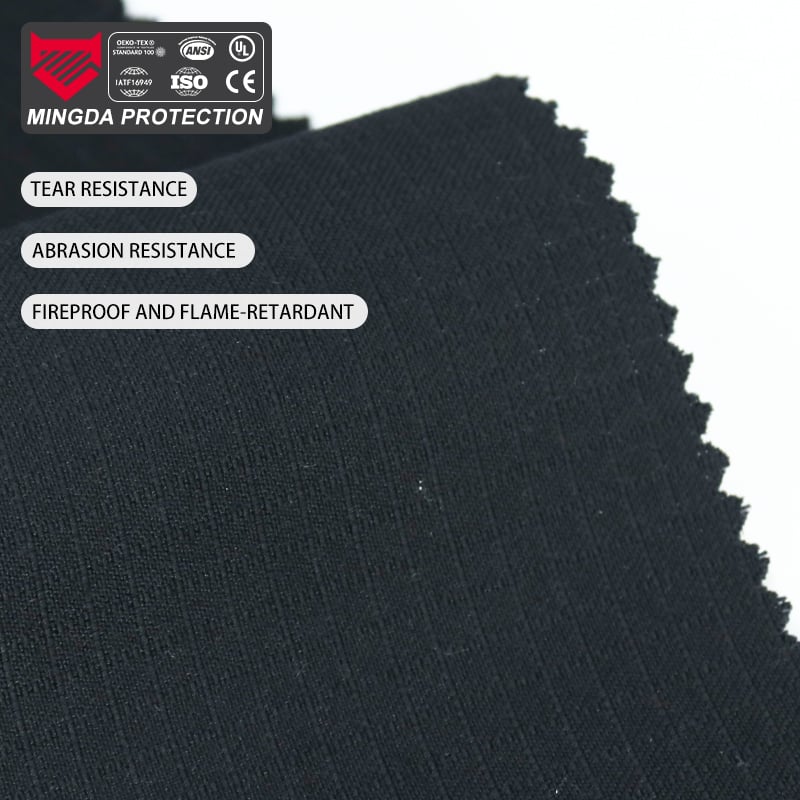
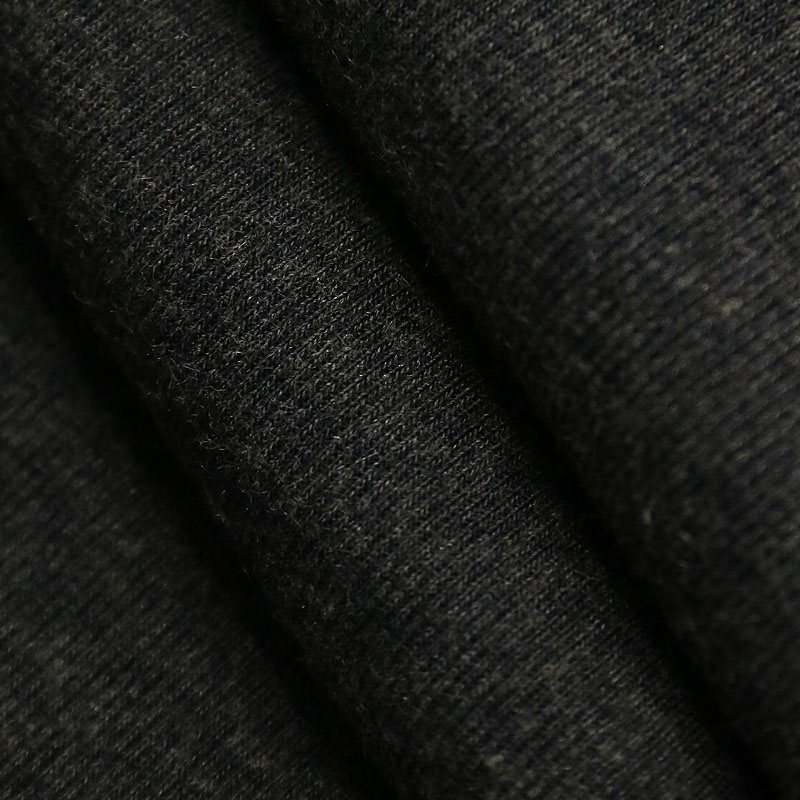
Our modacrylic fabric family: the inherently flame-resistant cloth that dyes easily and feels soft next to the skin, blended with cotton or FR viscose for the comfort layer of a flame-retardant garment. Recorded in both a plain-weave FR viscose blend and a modacrylic / cotton knit.
- Inherently flame resistant — self-extinguishing, and it does not melt or drip
- Soft hand and easy dyeing: bright and colour-coded shades are practical
- Antimony-free fibre option for restricted-substance programmes
The material
What modacrylic is, and what it does in a blended cloth
Modacrylic is a modified acrylic: the polymer is built from acrylonitrile copolymerised with monomers that carry halogen, and that copolymerisation is what makes the fibre inherently flame resistant. The flame resistance is part of the polymer chain rather than a finish applied after spinning, so it does not wash out. Put the cloth in a flame and it self-extinguishes once the ignition source is removed, and it does not melt or drip — it chars and shrinks away, which is why it suits a layer worn against the body and not only an outer shell.
Its limiting oxygen index is 27–34 against the 21% oxygen in ordinary air, and its continuous working temperature is around 150–180 °C — a lower ceiling than aramid, which is the trade a modacrylic blend makes in return for comfort and colour. Where a programme needs a high radiant-heat or molten-metal performance as well, the answer is usually a blend or a layered construction rather than one cloth doing everything.
Hand and moisture behaviour are where modacrylic separates itself from aramid in daily wear. The fibre is soft, with a wool-like bulk, and its moisture regain of 1.5–2% together with a smooth surface means a cloth built from it feels less harsh and less clammy than a 100% aramid structure of the same weight. That is why modacrylic and modacrylic / cotton blends sit in the layer against the wearer while aramid takes the outer shell.
Dyeability is the other half of the story, and it is where a blend needs care. Modacrylic dyes easily and takes bright, saturated shades, which is what makes colour-coded flame-retardant garments practical in this fibre. In a blend, though, performance follows the ratio and the weight: how much modacrylic, how much cotton or FR viscose, and how heavy the cloth is decide what the fabric can be expected to do, so those figures are established by testing the construction rather than inferred from the fibre. One formulation point is worth stating plainly — some modacrylic fibres are produced with antimony as part of the flame-retardant chemistry, antimony is restricted in several apparel programmes, and our antimony-free fibre exists for exactly that reason.
Who makes it
Who makes the fabric
Our textile manufacturing roots go back to 1972 and the company was established in Shantou, Guangdong in 2002. The modacrylic in this cloth is spun and converted in a 30,000 m² integrated plant, so the fibre, the blend and the finished fabric come from one production chain rather than from a trader.
This page covers the modacrylic and modacrylic blend class as a whole, woven and knitted. Blend ratio, weight and shade are set with the order against the garment the cloth is going into, and where a programme needs a fabric-level test result we test the construction and report that lot.
Technical data
Product information
The modacrylic and modacrylic blend fabrics we produce. Each row is a construction our own records name, with its recorded weight and blend. Where a record holds no figure we write On request instead of an estimate.
| Series | Composition | Weight | Construction | Key property | Source |
|---|---|---|---|---|---|
| Modacrylic / FR viscose plain weave | 60% modacrylic / 40% FR viscose | 175 g/m² | Woven, plain weave | Soft flame-retardant hand for workwear and uniforms | Product record |
| Modacrylic / cotton interlock (SK240) | 60% modacrylic with cotton | 240 g/m² | Knitted, interlock | Fluorescent-yellow shade recorded; inherently flame resistant | Product record |
| Modacrylic / cotton antistatic knit | Modacrylic / cotton with an antistatic component | On request | Knitted; navy version recorded | Antistatic version recorded for electronics manufacturing | Product record |
Modacrylic and FR blend fabric — the constructions we produce
The Source column names where each figure comes from: Product record is the specification recorded for that construction in our own product records. Performance in this class follows the blend ratio and the weight rather than the fibre name alone, so the composition and weight on each row belong to that row and are not carried across the table. Fabric is assessed at material level and the grade is established by testing the construction, so no grade code is printed here. Where a record holds no figure we write On request instead of an estimate.
Made to order
Specification options
Blend ratio, weight, structure and shade are set with the order. Tell us the comfort layer or shell the cloth is going into and the restricted-substance list your programme screens against, and we will confirm the specification and the material data that fit it.
Modacrylic dyes easily and takes bright, saturated shades, which is a real advantage in this fibre: colour-coded and high-visibility workwear shades are practical where they are hard to reach in aramid. The shades our records name for the class are fluorescent yellow, white and navy. A full shade card is not held, so the colour chips are not printed here. Send the shade reference your programme uses and we will confirm it against the dyehouse, and tell us at the same time if the garment is a layered high-visibility build, because the high-visibility rating belongs to the assembled garment rather than to this cloth.
Standards and certification
This cloth is supplied on material-level data. The items below are the ones we can stand behind for the class today; the fabric-level routes are named in the note, and none of them is printed above as a held result.
- OEKO-TEX® STANDARD 100 Textiles tested for harmful substances. Our fabric certificate covers woven and knitted fabric made from the fibres in its certified list, modacrylic and its blends among them, at Product Class II. The certificate covers the certified fibre and form list rather than a single model.
- ISO 9001 Quality management system.
- REACH SVHC Declaration available on request for the exact article supplied.
The fabric-level routes for this class are EN ISO 14116:2015 and EN ISO 15025:2016; EN ISO 11612:2015, where a blend of this kind is typically recorded with an A1 or A2 code together with a B1 or C1 code when it is tested; EN ISO 11611:2015 only if the construction is tested for it, because welding performance cannot be inferred from the fibre; EN 1149-1 and EN 1149-5 for the versions that carry a conductive component; EN IEC 61482-1-1:2019 for an arc rating issued as material data; the ASTM material route of ASTM F1506-22 with ASTM D6413; and NFPA 2112 material testing. Each of those is arranged to the customer's requirement and reported for the production lot, and we hold no report for a construction of this class, so no grade is printed here. High visibility is not claimed for the cloth: EN ISO 20471 applies to an assembled garment with fluorescent background and retro-reflective material, and a flame-resistant high-visibility garment is a layered build that carries EN ISO 20471 together with EN ISO 11612. Standards written for a finished garment are assessed on the garment, and that assessment and its certification belong to the garment maker who builds on our material data. Test reports and certificate copies are available from our sales team on request.
Frequently asked questions
What is modacrylic fabric, and why blend it with cotton or viscose?
Modacrylic is a modified acrylic: acrylonitrile copolymerised with halogen-bearing monomers, which is what makes the fibre inherently flame resistant. It is blended with cotton or with FR viscose to get the comfort and the hand that a garment worn against the skin needs, while keeping the flame resistance in the fibre. The trade is that performance follows the blend ratio and the weight, so the figures for a construction come from testing that construction.
Does the fabric melt or drip?
No. Modacrylic chars and shrinks away from the flame instead of melting, so there is no molten polymer to stick to skin — the failure mode that makes a melting fibre dangerous in a garment worn against the body. Its limiting oxygen index is 27–34 against the 21% oxygen in ordinary air, which is why it self-extinguishes once the ignition source is removed. Its continuous working temperature is around 150–180 °C.
Which blend ratios and weights can you supply?
The constructions our records name are a 60% modacrylic / 40% FR viscose plain weave at 175 g/m², and a modacrylic / cotton interlock knit at 240 g/m², plus a modacrylic / cotton antistatic knit. Tell us the weight the garment needs and the fibre or restricted-substance constraint it works under, and we will confirm the blend and the construction against it.
What is the antimony-free option, and when should it be specified?
Some modacrylic fibres are produced with antimony as part of the flame-retardant chemistry, and antimony is restricted in several apparel programmes. Our antimony-free fibre exists for exactly that reason, so specify it when your programme screens for restricted substances or when the buyer asks for the substance declaration before approving the cloth. Where that matters, tell us at enquiry stage rather than at order stage.
Can this fabric be used for a high-visibility flame-retardant garment?
The cloth can go into such a garment, but high visibility is not a property of the cloth and we do not claim it as one. EN ISO 20471 applies to an assembled garment with a fluorescent background material and retro-reflective elements, and a flame-resistant high-visibility garment is a layered build that carries EN ISO 20471 together with EN ISO 11612. The assembly and its assessment belong to the garment maker; we supply the material data the build starts from.
Does the fabric hold a protective-clothing certification?
No, and we do not present it as if it did. What we supply is material-level data: composition, weight, construction and the fibre properties of the lot. The standards that apply to this class are applied by testing the fabric and reporting its codes, and the certification of a finished garment belongs to the garment maker who builds on that data. Where your approval file needs a standard-referenced result on the cloth, we arrange the testing to your requirement and issue the report for the lot.
Let’s talk about your fabric requirements
Tell us the application, the required weight and the standard you need to meet. Our technical team will come back with a matching fabric, the spec sheet and a quotation.