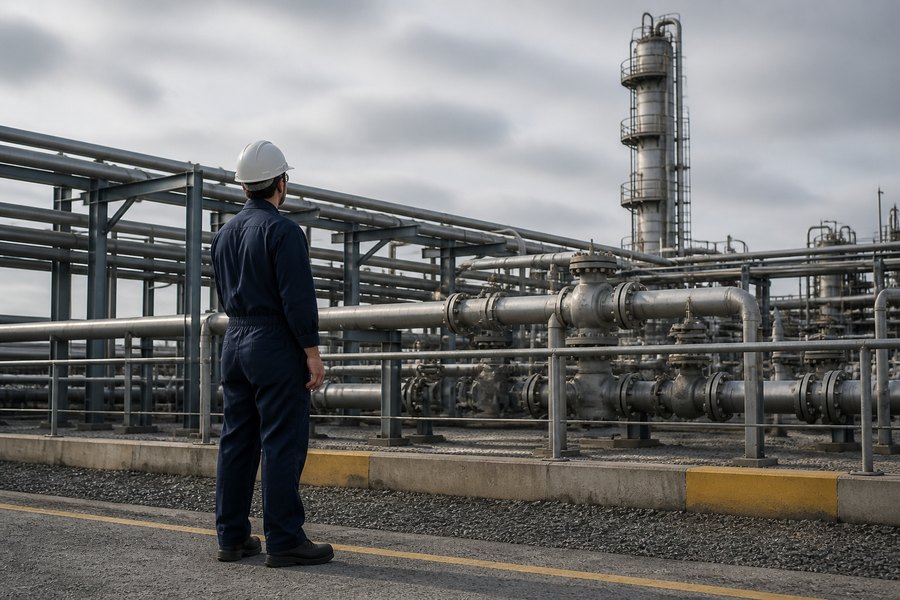
Flash fire — oil, gas and petrochemical
A short, intense flash of flame and radiant heat from a release that ignites. Coverall fabrics are judged on how much heat they let through and whether they keep burning after the flame is gone.
A standard is only useful if you know what it measured. This page takes the hazards first — what actually happens to the person wearing the fabric — and then names the standard, the test and the result you should expect to see on a report.
Each card names the hazard, what the test has to prove, and the standards a buyer in that industry will ask for.
A short, intense flash of flame and radiant heat from a release that ignites. Coverall fabrics are judged on how much heat they let through and whether they keep burning after the flame is gone.
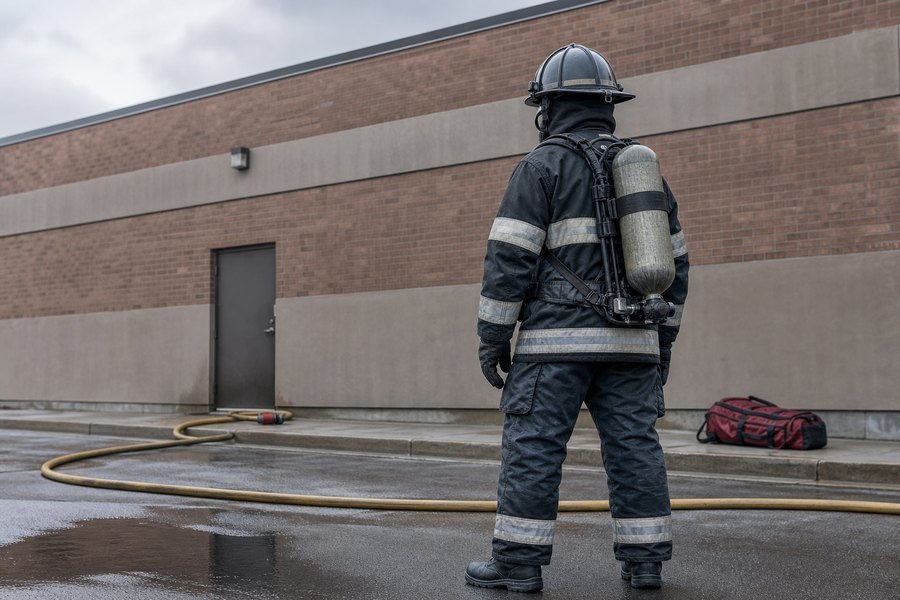
Sustained flame, conducted heat and steam inside turnout gear. The fabric has to hold its structure in a multi-layer assembly and survive repeated laundering.
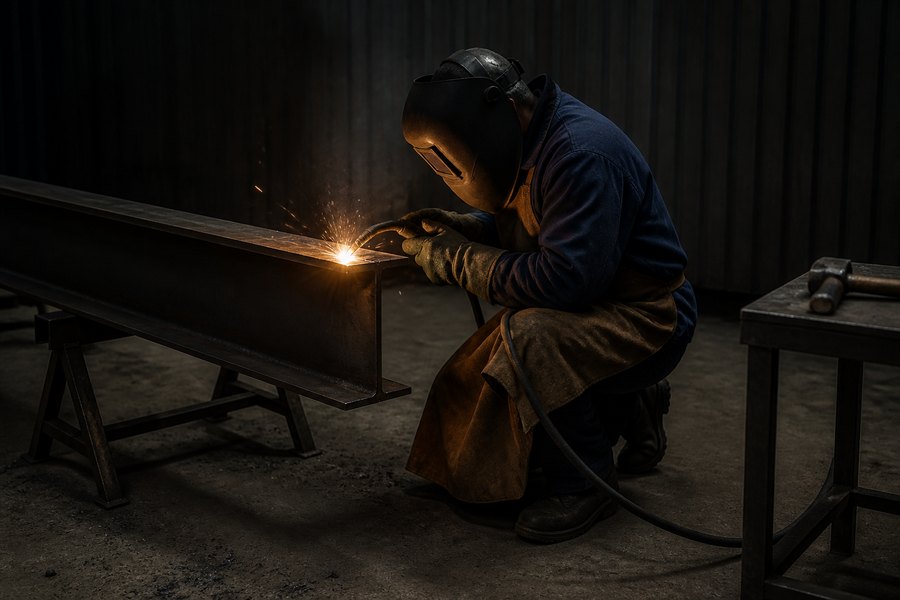
Spatter, molten droplets and hot contact. The test is about resistance to small molten particles and to radiant heat, and about the surface letting metal run off rather than hold it.
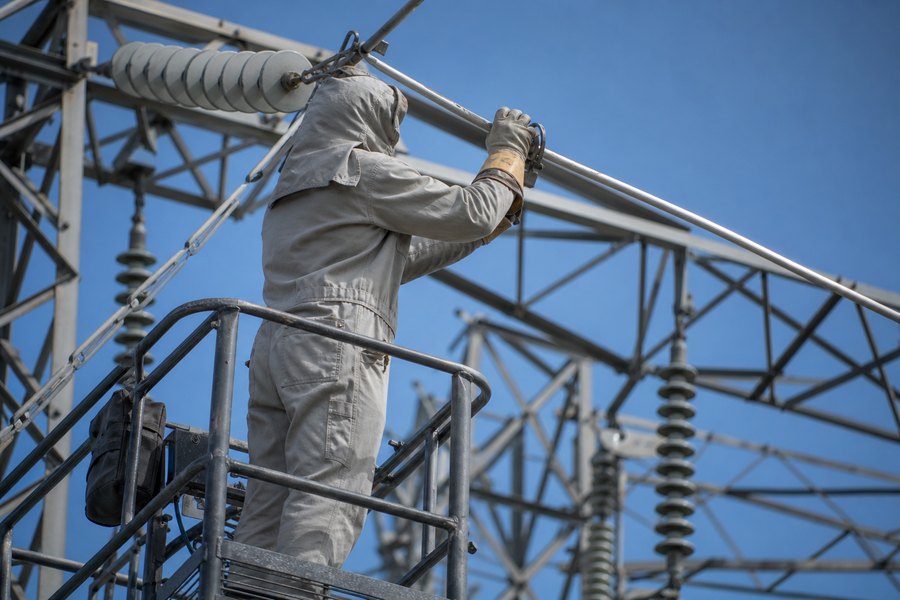
An arc delivers radiant heat in a burst, and any fabric that melts adds a burn on top of the burn. Arc-rated clothing is rated in cal/cm², not by fibre content.
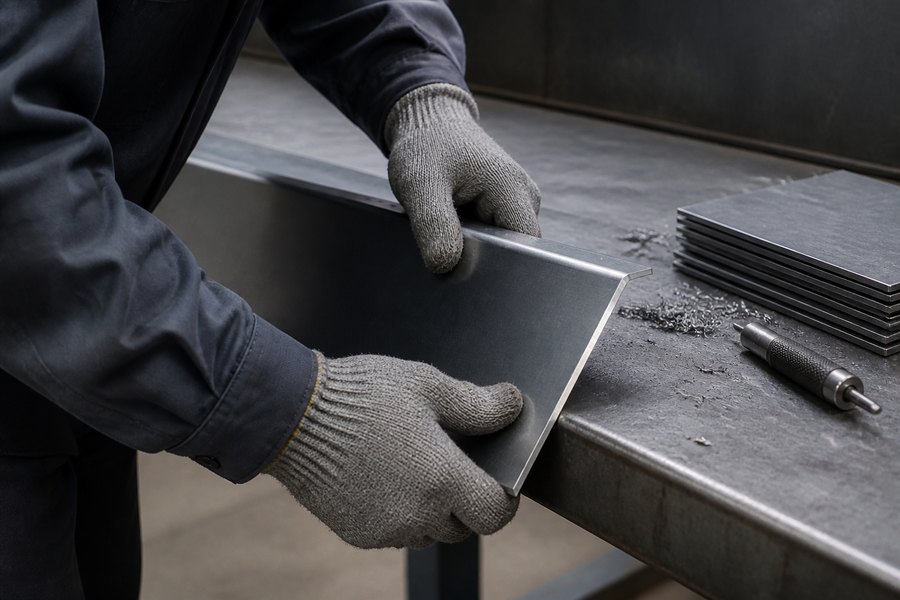
Blade and edge contact against the hand, arm or body. Cut performance is measured on a defined machine with a defined blade, which is why the level is quoted with the standard it came from.
Grouped by where the standard comes from. Each entry says what the test measures and how it is run. No certificate numbers and no expiry dates are published: the copies travel with the sales documents for your order.
Textiles tested for harmful substances
A laboratory screens the finished textile for harmful substances against a published limit list and issues a certificate for the article tested.
Quality management system
An audit of the management system behind production, not of the cloth itself: how orders, records, non-conformities and traceability are controlled.
Automotive quality management system, for the manufacture of polyester and aramid cloth
Heat and flame protective clothing
A clothed mannequin or a specimen is exposed to flame, radiant heat, molten metal or hot contact, and the heat passing through is measured. The result is a set of performance codes rather than a single number.
Welding and allied processes
Samples are exposed to a flame and to small molten metal drops. The fabric is judged on whether it keeps burning, whether droplets perforate it, and how much heat reaches the reverse face.
Limited flame spread, materials
Limited-flame-spread testing: a small flame is applied to a specimen and the afterflame and afterglow times and the charred area are recorded. It is a material test, not a garment rating.
Limited flame spread, test method
The vertical flame test method used by the EN ISO 11611 and 11612 families: a defined flame is applied to the bottom edge of a specimen and the spread and after-burn are timed.
Cut resistance, TDM test method
A blade slides across the specimen under a set load at high speed, and the load needed to cut through in a fixed travel is found. Reported as a force in newtons, which is what the higher cut levels are based on.
Electric arc rating, material
An open-arc test: a controlled arc is struck near a specimen and the heat energy it takes to cause a second-degree burn is derived. The output is an arc rating, quoted in cal/cm².
Electrostatic properties, antistatic versions
A specimen on a rotating stand is charged and the rate at which the charge bleeds away is measured, giving a surface resistivity.
Water penetration and breathability
Water penetration and water-vapour resistance are tested together, so a fabric that keeps rain out without trapping sweat can be described in one pair of codes.
Chemical protective clothing, materials
The material-level method for chemical protective clothing: specimens are challenged with liquids and the permeation, penetration and repellency are graded.
Liquid chemical splash, Type 6
The test route for limited liquid-chemical splash protection on the material and seams of the garment.
Liquid chemical jet and spray
The test route where a garment has to resist a jet or spray of liquid chemical, not merely a splash.
Mechanical risks, protective gloves
Mechanical hazards on gloves: abrasion, blade cut, tear and puncture are tested separately, and cut now has two routes — the rotating-blade method and the TDM method for higher-performance materials. Puncture is a different test from cut and its result is a force in newtons.
Thermal risks, gloves and arm protection
Thermal hazards on gloves and arm protection: flame, contact heat, convective heat, radiant heat, small molten metal and large molten metal are tested, and each gets its own level.
Vertical flame spread, test method
The base vertical flame test method used before a national classification is applied: flame application time, afterflame, afterglow and charred length are recorded.
Flame retardancy of decorative textiles
The European test for flame-retardant decorative textiles such as curtains and stage drapes, producing a Class 1 or Class 2 result.
Flame resistant textile materials
The North American FR clothing standard: vertical flame testing plus heat-transfer testing plus an arc rating, so a fabric is described on one sheet.
Vertical flame test, textiles
The two-second vertical flame test behind most US FR workwear: afterflame, afterglow and char length are measured on a conditioned specimen.
Instrumented manikin test for flash fire
A full-scale instrumented manikin test: a garment is exposed to a controlled hydrocarbon flash fire for 3 seconds, and thermal sensors record predicted body burn injury.
Arc rating of materials
The open-box arc test on fabric, from which a fabric arc rating in cal/cm² is calculated. It is the US counterpart of the IEC open-arc method.
Heat transmission on flame exposure
Heat transfer through a fabric under a defined radiant heat exposure, used where a garment has to be described by its thermal performance rather than by its fibre.
Hand and arm protection, cut levels
The US hand-protection standard: cut is reported as a level from A1 to A9 based on the load a blade needs to cut through. Cuts toward the hand and cuts toward the body are rated on the same scale.
Glove impact protection
Impact protection for gloves: a weighted striker is dropped onto knuckle specimens and the transmitted force is measured and graded 1 to 3.
Surface burning, building materials
A surface-burning test for building materials and laminates: flame-spread and smoke-developed indices are produced and the material is given a class.
Flash fire protective clothing
The North American industrial flash-fire standard: vertical flame, heat transfer, thermal shrinkage and a mannequin test combine into one certified garment specification.
Flame propagation of textiles and films
Flame propagation on textiles and films, tested at 45 degrees in two methods by weight, and widely required for public-building drapery.
Flammability of clothing textiles
The US consumer rule for clothing textiles: the fabric is tested and placed in a class, and the class decides how the fabric may be sold.
Children's sleepwear, sizes 0–6X
The US mandatory standard for the flammability of children's sleepwear in sizes 0–6X, tested on the finished garment after laundering and with a char-length limit per specimen.
Children's sleepwear, sizes 7–14
The same test programme as 16 CFR 1615, applied to children's sleepwear in sizes 7–14.
Vertical flame spread, textiles
The Chinese vertical-burn method for textiles: afterflame, afterglow and damaged length are measured, and the fabric is placed in B1 or B2.
Protective clothing — flame retardant, Part 1
The Chinese national standard for flame-retardant protective clothing, covering the garment construction as well as the fabric, including performance after repeated laundering.
Flame-retardant fabrics, general
The Chinese general flame-retardant fabric standard, covering industrial and decorative fabrics and separating permanent, durable and disposable finishes.
SVHC screening and information transfer
A screening of the article against the EU candidate list of substances of very high concern, with the communication duty that follows.
Restricted azo dyes, 22 aromatic amines
The restricted aromatic amines under REACH Annex XVII are tested for, because certain azo dyes can release them.
Restricted substances, customer-requested test
Restricted heavy metals and flame retardants are tested where a customer asks for the electronics-substances route.
Test reports and certificate copies are available from our sales team on request.
EN 388 and ANSI/ISEA 105 both grade cut resistance, and their numbers do not convert. A "level 5" means nothing on its own — the standard has to be named with it. The same applies to puncture, which is a separate test from cut and is quoted in newtons rather than as a level.
A fibre can pass a vertical flame test and still fail in a garment, because coatings, membranes, seam construction and moisture all change how heat moves through the assembly. Coated, laminated and multi-layer constructions are tested as the assembly they are.
A report describes the material that was tested. Ask for the report for the lot you are buying rather than an undated summary — the report carries the batch and the test conditions, which is what an auditor will want to see.
We make yarn and fabric, and we supply the test evidence for the material. Where a finished garment carries a certification mark, that certificate belongs to the company that assembled and certified the garment, not to the mill that supplied the cloth.
Tell us the application, the market you are selling into and the standard you have to meet, and we will confirm the construction and the documents that go with it.