HAILIDUN

Cut-resistant apron, UHMWPE and stainless-steel composite, ANSI A4

Model FS-3 · UHMWPE (HPPE) with stainless steel wire, nylon and spandex · ANSI/ISEA 105 A4 · 94 × 66 cm

A cut-resistant apron for the work where the blade comes towards the body rather than towards the hand: boning and trimming, food processing, sheet-metal work and commercial kitchens. Part of the HAILIDUN protective line by Shantou Mingda Textile.

  • ANSI/ISEA 105 A4
  • Stainless steel wire
  • Custom size
  • ANSI/ISEA 105 A4 — the level recorded for this model
  • Cut resistance comes from the composite yarn, with a stainless steel wire component in the blend
  • White, grey or black, with custom logo and custom size

Five points

Why this apron

Five points, and the engineering reason behind each one.

Cut resistance from the yarn, not from a finish

The apron resists a blade because of what the yarn is made of: high-tenacity UHMWPE (HPPE) fibre with a stainless steel wire component in the blend. There is no coating to wear through and no flame-retardant or cut-resistant finish to be consumed, so the protection at the end of a garment life is the protection it started with.

The steel wire is the second line

A high-tenacity fibre resists a blade drawn across it. The stainless steel component is what the blend adds for the blade that presses and drags — the reason a metal-and-fibre hybrid is chosen over a fibre-only apron on a boning line or a trimming bench.

Worn against the body, so it has to move

An apron is only protection while it is being worn. Nylon and spandex in the blend keep the front panel supple enough to bend, reach and turn in, which is what decides whether the apron is still on at the end of a shift.

Made to your size and your logo

The standard panel is 94 × 66 cm, and both the size and the branding are set with the order rather than picked from a stock ladder. Send the size your team needs and the artwork for the logo.

Built in the plant that spins the yarn

We spin the HPPE yarn and convert this apron in our own plant in Shantou, Guangdong, so the fibre content and the blend of the cut layer are controlled at the source rather than in a bought-in garment.

Technical data

Structure and material

What the apron is made of, taken from our product record for model FS-3.

Key specifications
Model FS-3
Composition UHMWPE (HPPE) with stainless steel wire, nylon and spandex
Cut layer Composite yarn — the cut resistance is a property of the yarn, not of a coating
Form Bib apron with a cut-resistant front panel
Brand HAILIDUN
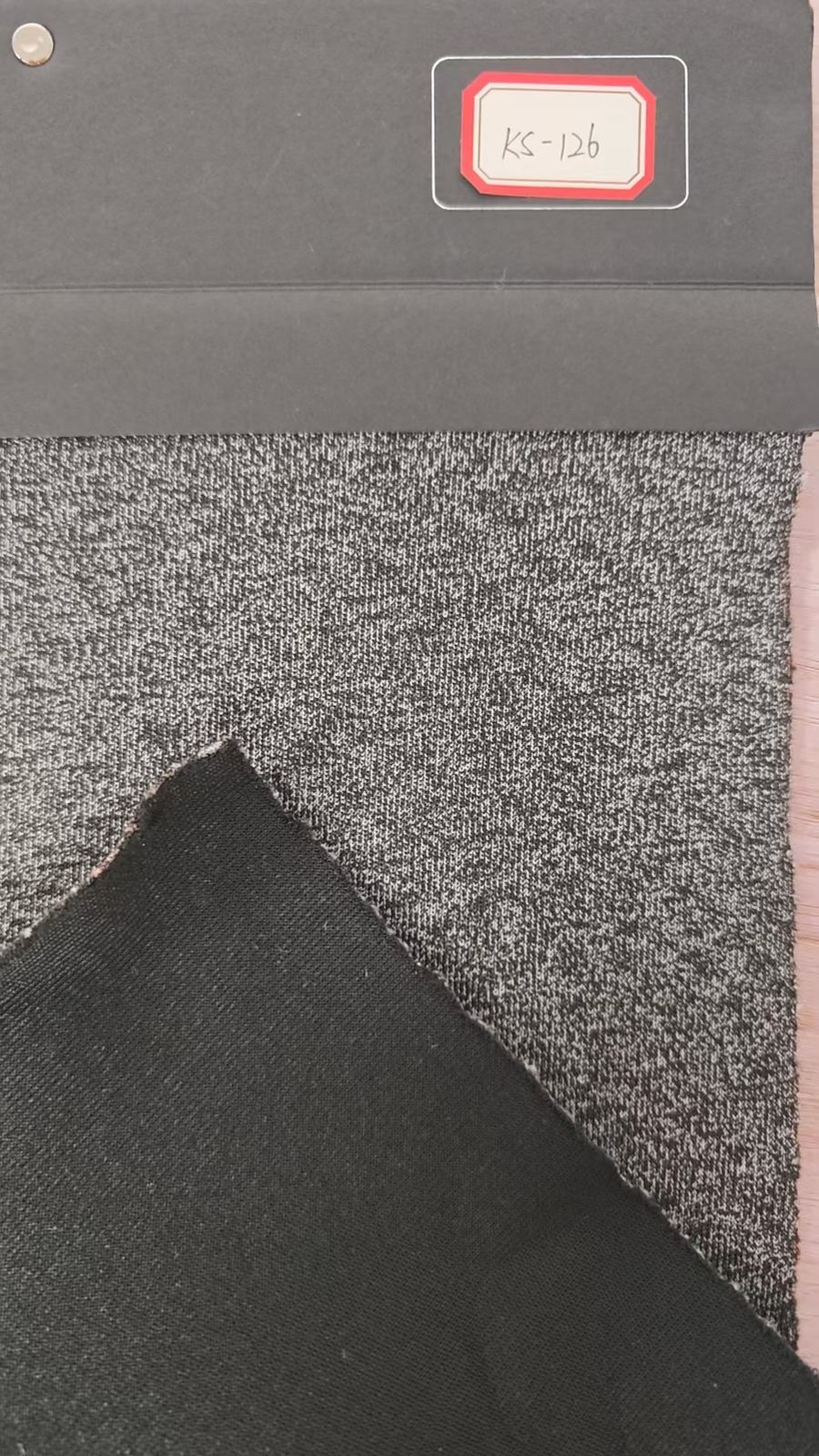
UHMWPE cut-resistant woven fabric
UHMWPE (HPPE) cut-resistant fabric — the same high-tenacity fibre family the apron yarn is built from.

Composition, form and the model number are the values our product record carries for FS-3. Weight per piece is set with the order and is confirmed with the specification — tell us the size and the construction your programme runs.

Ratings explained

Reading the cut level

Two standards carry cut ratings in this market, and they are written differently. ANSI/ISEA 105 reports cut resistance as a level from A1 to A9, set by the load a blade needs to cut through the construction. EN 388 is the European standard: its 2016 edition reports the cut result as a letter from A to F using the ISO 13997 test, and its 2003 edition used a five-level coupe scale instead.

The two scales are not interchangeable — different blades, loads and methods — so a level is only meaningful with the standard and the edition named beside it. This page prints the level our record carries for FS-3 and names its standard; it does not convert it, and it does not repeat the older listing claim, because no result on the other scale is recorded for this construction.

The two cut standards compared
What it decides EN 388 ANSI/ISEA 105
Scope Mechanical risks to the hand: abrasion, cut, tear, puncture Hand protection: cut, abrasion, puncture and impact levels
How cut resistance is measured Coupe test (rotating blade under load) in the 2003 edition; ISO 13997 TDM test from the 2016 edition TDM test; the result is the load in grams needed to cut through the sample
How the result is written Four digits — abrasion, cut, tear, puncture — plus a letter A–F for the ISO 13997 cut result A cut level from A1 (lowest) to A9 (highest)
Where it is used Europe, and the markets that follow EN standards United States, and the markets that follow ANSI/ISEA

The two cut standards compared

Which level for which work
Level band Typical work What decides it
A1 – A2 Light handling: order picking and packing, assembly of finished parts, handling with occasional light burrs The occasional sharp edge; movement is limited and a light layer is enough
A3 – A4 General handling of sharp-edged material: boning and trimming, fish filleting, sheet-metal trimming, glass and panel handling A continuous sharp edge drawn towards the body, so the yarn has to carry the cut
A5 – A6 Heavy handling: metal stamping, plate and profile work, demolition and recycling A heavier cut load plus abrasion, which is where denser and more highly blended constructions are used
A7 – A9 Extreme cut exposure: heavy plate, blade-adjacent and specialist industrial handling The highest cut load, normally bought against a specific risk assessment

Which level for which work

FS-3 — what our records carry

Key specifications
Cut level recorded for this model ANSI/ISEA 105 A4
Test method behind that level TDM test — the load the blade needs to cut through the construction

One cut level is printed for this model, on the standard it was recorded against. No EN 388 level is printed, because no EN 388 result is recorded for this construction and the two scales do not convert. The level delivered with your order is confirmed against the test report for that production lot, and where an EN 388 result or an independent laboratory result is needed, the testing is arranged to the customer's requirement.
Made to order

Size and specification

The apron is made to order. These are the values our record carries today.

Key specifications
Model FS-3
Standard panel size 94 × 66 cm
Custom size Cut to the size you specify with the order
Colour White, grey or black
Branding Custom logo applied to your artwork
Composition UHMWPE (HPPE) with stainless steel wire, nylon and spandex

The standard panel size is the one our record carries. A different size is made to your specification rather than chosen from a stock ladder, so give us the panel dimensions your team uses and the logo artwork, and both are confirmed with the specification for the order.

In service

Where this apron works

A cut-resistant apron is specified where the blade travels towards the trunk and legs — the area a glove does not cover.

Cut-resistant construction made from UHMWPE (HPPE) yarn
Cut protection over the front and legs, where the blade travels towards the body rather than the hand.

Butchery, boning and trimming

The knife is drawn towards the trunk on nearly every cut, so the apron is the layer standing between the blade and the body over the front and the tops of the legs.

Food processing and filleting

Continuous blade work at a bench: the apron adds cut and abrasion resistance where the material is pulled against the operator rather than held away from them.

Sheet-metal trimming and fabrication

Handling and trimming sheet, blanks and profiles, where an edge is dragged against the body and the hazard is a cut rather than a crush.

Commercial kitchens

Boning, portioning and general knife work where a heavy cut-resistant front is wanted without moving to a full protective suit.

Certification and compliance

The cut level printed on this page is the result our record carries for model FS-3, stated against the standard it was recorded on. Where a certificate for a specific standard is required, we arrange testing to the customer's requirement.

  • ANSI/ISEA 105 Cut resistance reported as a level from A1 to A9; A4 is the level recorded for this model.
  • OEKO-TEX STANDARD 100 The HPPE the apron is built from is certified to OEKO-TEX STANDARD 100, so the range is made from certified fibre.
  • ISO 9001 Quality management system.

Three items are listed: the cut level recorded for the model, the certification the fibre is made under, and the quality system we work under. No result on another cut scale is claimed, because none is recorded for this construction. Test reports and certification documents are available from our sales team on request, and where a standard-referenced result is needed for your own approval file, the testing is arranged and issued for the production lot.

Frequently asked questions

Which cut level does this apron have, and on which standard?

ANSI/ISEA 105 A4 — that is the level our record carries for model FS-3. We state the standard beside the level because a cut number on its own is not readable: ANSI/ISEA 105 reports the load a blade needs to cut through the construction, while EN 388 reports a letter from A to F on its own test method, and the two do not convert. If your programme is written to EN 388, tell us and we will arrange the testing for that scale rather than translating the number we hold.

What is the stainless steel wire doing in a cut-resistant apron?

It is the second mechanism. A high-tenacity fibre such as UHMWPE (HPPE) resists a blade that is drawn across it, which covers most of what happens on a boning line or at a trimming bench. A stainless steel component in the blend adds resistance to the blade that presses and drags, which is why a metal-and-fibre hybrid is chosen where the exposure is continuous. It also means the apron is a composite rather than a plain textile, and it should be treated as one when it is cleaned.

Can the apron be made in our size and carry our logo?

Yes. The standard panel is 94 × 66 cm, and both the size and the branding are set with the order: send the panel dimensions your team uses and the artwork for the logo, and both are confirmed with the specification. There is no stock size ladder to choose from, which is why the size and branding rows on this page are written the way they are.

Is the apron suitable for contact with food?

The apron is built for boning, trimming and food-processing benches, and the materials are selected for that service: the HPPE it is made from is certified to OEKO-TEX STANDARD 100, and the certification documents come with the sales documents on request. Whether a specific apron may be used in direct contact with food is set by the food-contact rules of the market you are selling into, so tell us the application and the market and we will confirm the construction and the documentation that fit it.

How should the apron be cleaned?

It is a composite construction, so cleaning is set by the blend rather than by a single fibre: the UHMWPE, nylon and spandex components and the steel wire have different tolerances, and a wash cycle that suits one may not suit another. We do not publish a wash-cycle figure without test data for the specific construction. Tell us your laundry or cleaning process and we will confirm what the apron in your specification can take.

How do I verify the apron before ordering?

Ask for the test report for the production lot. The cut result, the composition and the panel dimensions are recorded per lot, and the level on this page is the value recorded for model FS-3. Where an independent result is needed for your own approval file, third-party test reports can be provided on request.

Do you make other cut-resistant goods from the same fibre?

Yes. The same UHMWPE (HPPE) and aramid fibre systems are used in cut-resistant fabrics, gloves and aprons from our HAILIDUN protective line, and in the reinforcement fabric we supply to hose makers. If your programme needs a cut-resistant layer rather than a finished apron, tell us the application and we will match the fibre and the structure to it.

Let’s talk about your fabric requirements

Tell us the application, the required weight and the standard you need to meet. Our technical team will come back with a matching fabric, the spec sheet and a quotation.

Scroll to Top