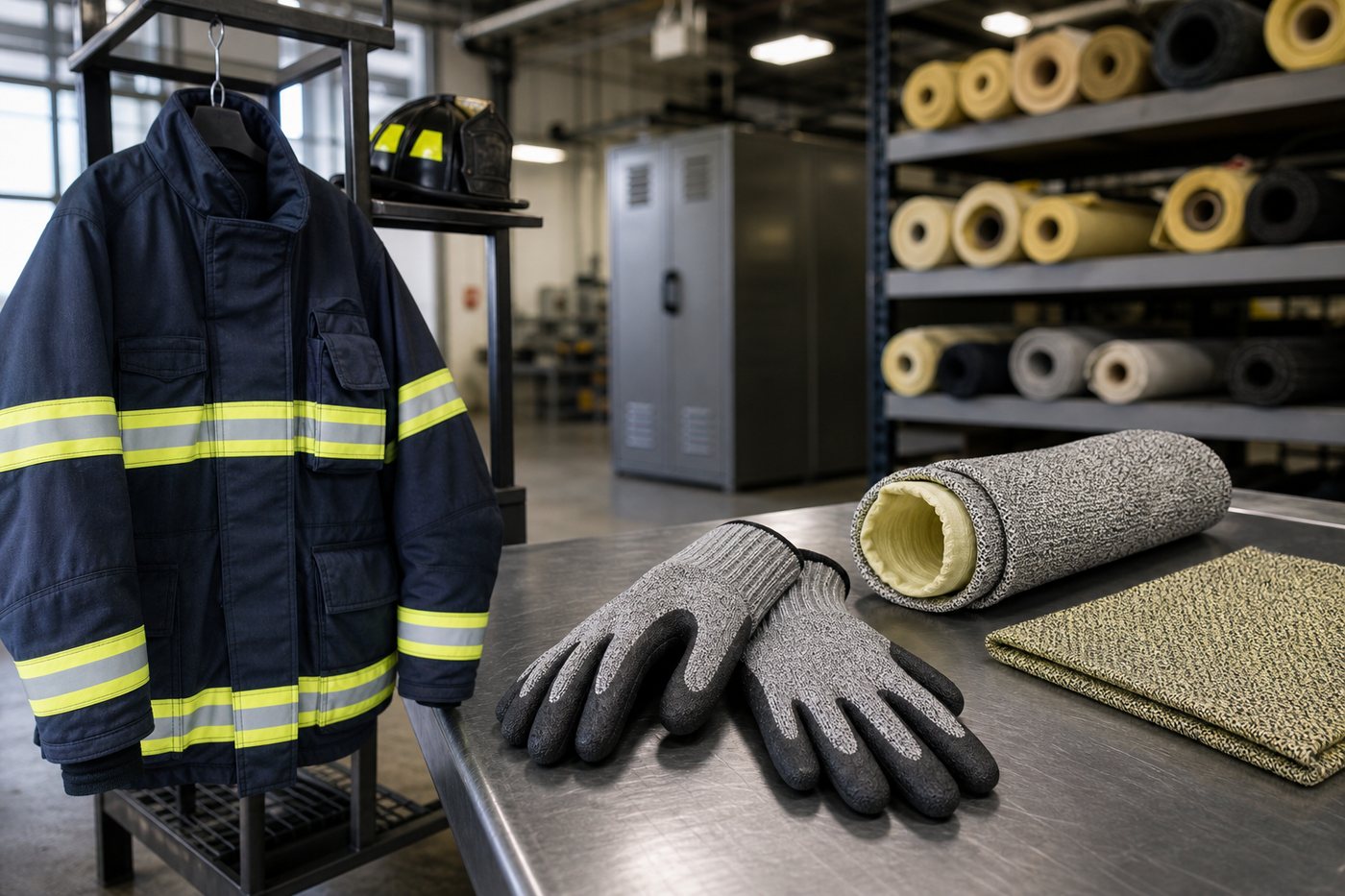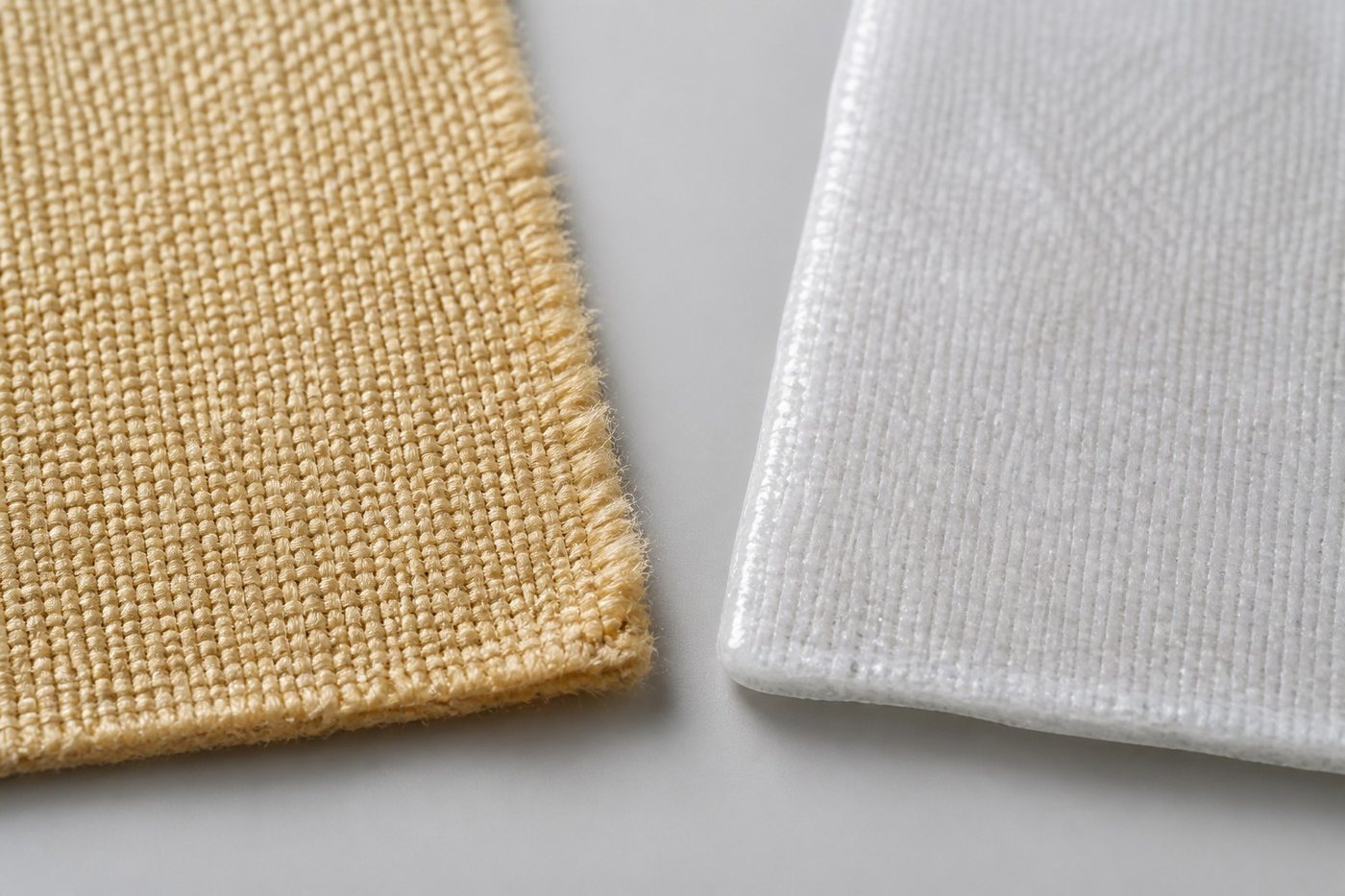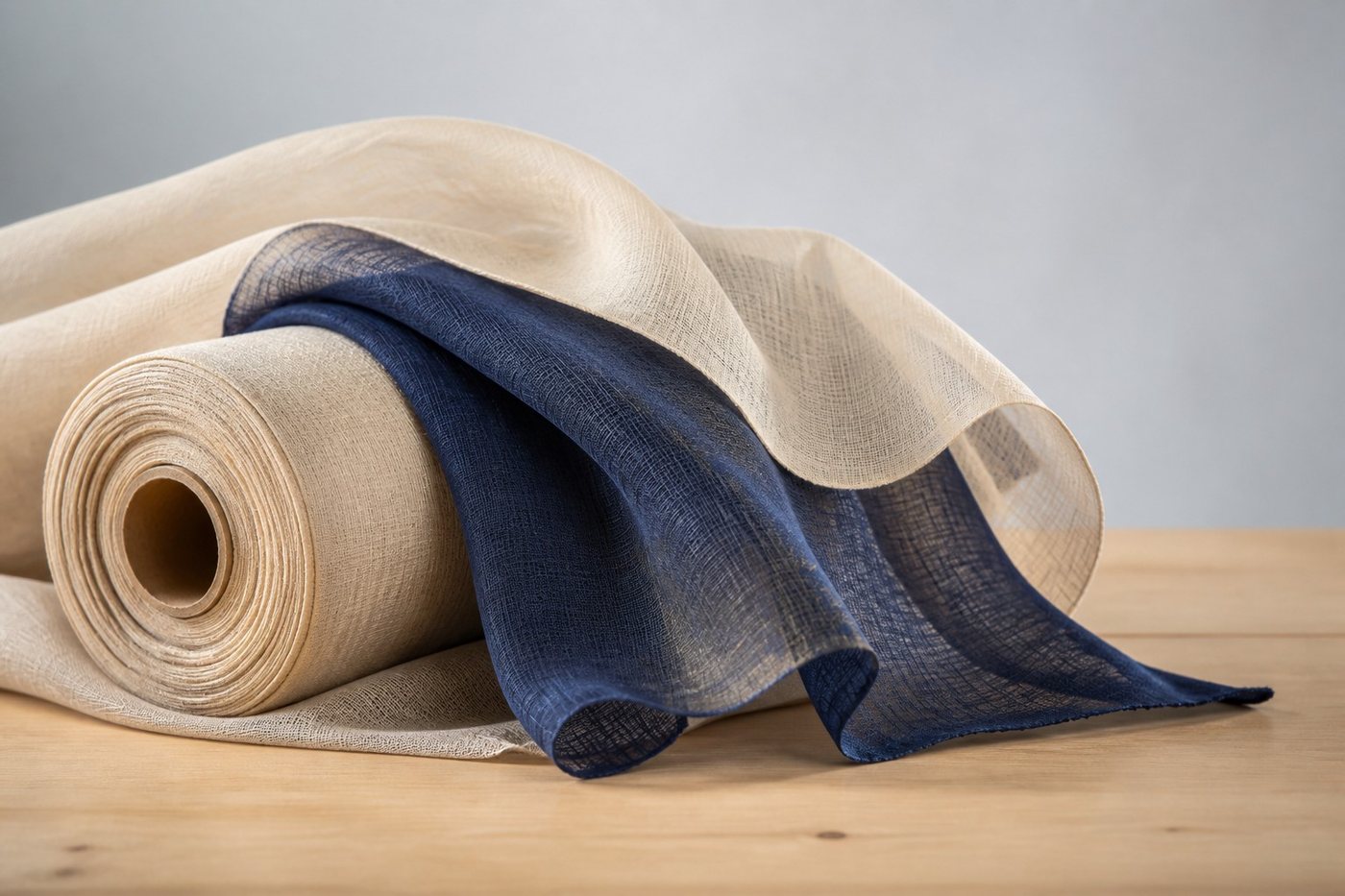
Direct answer: Aramid and modacrylic are both inherently flame-resistant (IFR) fibers — the flame resistance is built into the fiber itself and cannot be washed out. Aramid (meta and para grades) delivers higher heat resistance and mechanical strength, but it costs more and is difficult to dye. Modacrylic is softer, more comfortable, easier to dye in vivid colors and more economical, with somewhat lower heat resistance. Most higher-grade FR workwear fabrics blend the two to balance protection, comfort and cost.
The Short Answer
Aramid is an aromatic polyamide in two grades: meta-aramid (aramid 1313-type) for thermal protection and flame resistance, and para-aramid (aramid 1414-type) for tensile strength and cut resistance.
Modacrylic is a modified acrylic copolymer containing flame-retardant comonomers. With a Limiting Oxygen Index (LOI) of roughly 27–34%, it self-extinguishes when the flame source is removed.
Both are inherently FR: their protection never washes out or wears off, unlike chemically treated cotton — the key difference from treated FR fabrics.
The practical difference: aramid wins on heat resistance, strength and durability; modacrylic wins on comfort, dyeability and price.
The industry answer: most mainstream FR workwear uses blends — modacrylic/cotton (e.g. 93/7) for economy, or aramid/modacrylic blends for higher-grade performance.
Key Performance Comparison
| Criterion | Aramid | Modacrylic |
|---|---|---|
| FR mechanism | Inherent — built into polymer chain | Inherent — FR comonomer in copolymer |
| LOI | 28–32 | 27–34 |
| Continuous use temp. | ~200–220°C (meta-aramid) | ~150–180°C |
| Tenacity | High — para-aramid ~5x steel by weight | Moderate |
| Comfort / hand feel | Slightly stiff, can feel dry | Soft, more cotton-like |
| Dyeability | Difficult — limited shades | Easy — vivid, colorfast shades |
| Anti-static | Needs conductive fiber added | Inherent when blended with cotton |
| UV resistance | Poor — degrades with prolonged UV | Moderate |
| Relative cost | Higher | Moderate — more cost-effective |
| Typical use | Firefighting, foundry, high heat, arc flash | Industrial workwear, high-visibility uniforms, arc flash |
Sources: ISO/CEN test standards (ISO 15025, ISO 9151, ISO 6942); published fiber datasheets (DuPont, Teijin, Kaneka); industry technical guides (TenCate, Tyndale, 3L Tex).
When to Choose Aramid
High-temperature exposure: firefighting, foundry work, petrochemical operations where radiant or convective heat is the daily hazard.
Arc flash protection: meta-aramid resists the intense thermal energy of electrical arcs without melting (NFPA 70E / ASTM F1506).
Long service life under harsh conditions: aramid’s strength and abrasion resistance extend garment life.
Certified high thermal protection: specifications requiring EN ISO 11612 or NFPA 2112 ratings.
When to Choose Modacrylic
Cost-effective FR protection: general industrial workwear where budget is the primary driver.
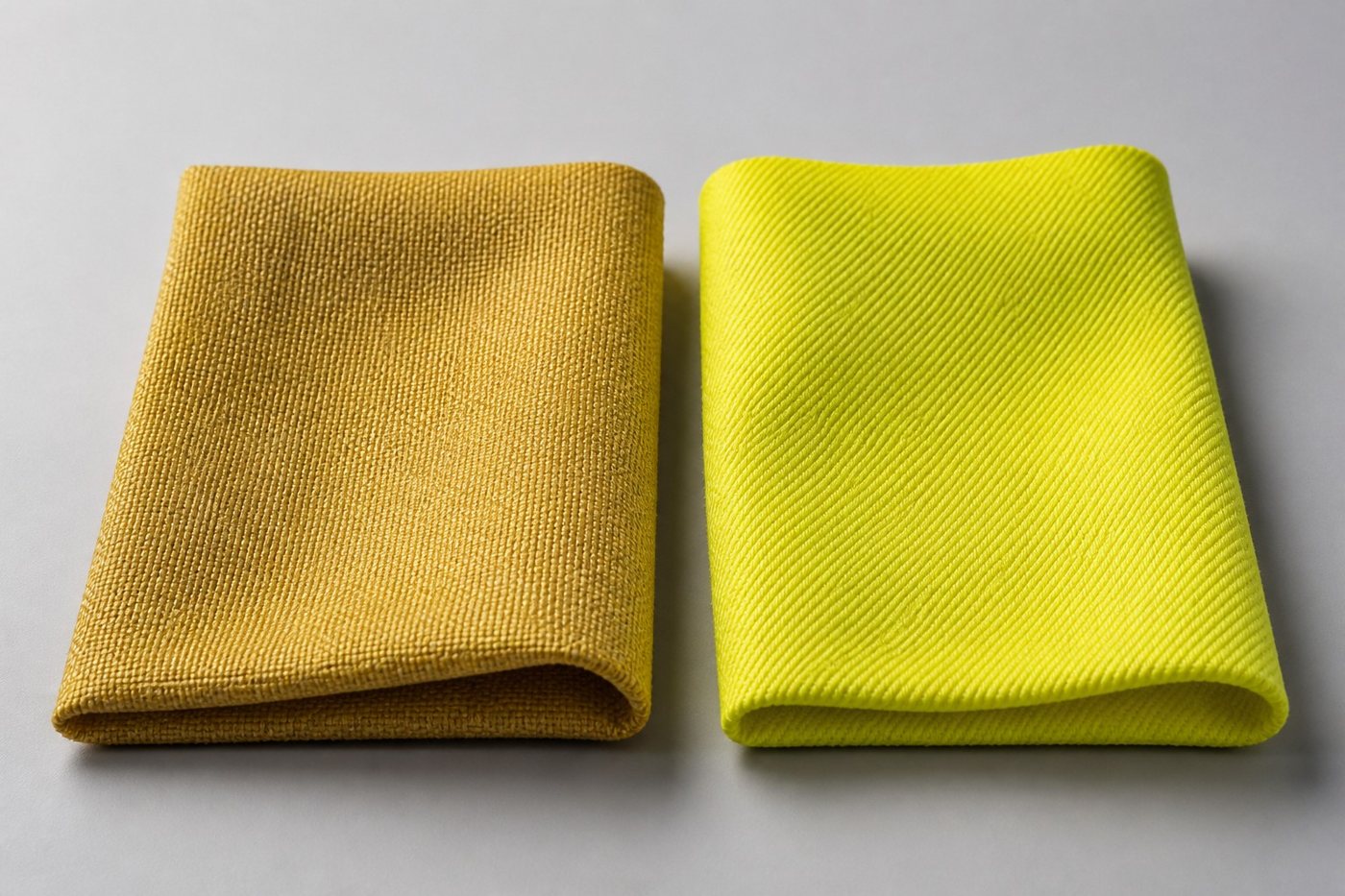
Vivid, colorfast uniforms: modacrylic accepts dyes far better than aramid — ideal for high-visibility fluorescent yellow or branded workwear.
Anti-static without extra fibers: modacrylic/cotton blends provide inherent antistatic properties.
All-day wear compliance: softer hand feel improves worker acceptance, especially in warm climates.
Moderate thermal exposure: applications that do not demand extreme heat resistance.
The Third Option: Aramid/Modacrylic Blends
Many higher-grade FR fabrics blend aramid and modacrylic fibers to combine the strengths of both. A typical blend delivers improved thermal protection over pure modacrylic, better comfort and lower cost than pure aramid, combined anti-static and FR properties, and wider acceptance across international standards. Similarly, the classic modacrylic/cotton blend (93/7) balances cost, comfort, antistatic behavior and flame resistance for industrial arc-flash and flash-fire workwear.
Standards and Certifications to Verify
| Standard | Application |
|---|---|
| EN ISO 11612 | Protective clothing against heat and flame (Europe) |
| NFPA 2112 | Flash fire protection for industrial personnel (USA) |
| ASTM F1506 / NFPA 70E | Arc-rated protective clothing |
| EN 1149 | Electrostatic properties |
| OEKO-TEX Standard 100 | Harmful substance testing |
Regardless of fiber type, always request a full technical data sheet (TDS) showing composition, weight (gsm) and third-party test reports — a reputable mill will provide them without hesitation.
Frequently Asked Questions
Q1: Which is better, aramid or modacrylic?
Neither is universally better — they suit different hazards. Choose aramid for high heat, strength and durability; choose modacrylic for comfort, color and cost. For most industrial FR workwear, a blend of the two (or modacrylic/cotton) is the practical sweet spot.
Q2: Is modacrylic fabric really flame resistant?
Yes. Modacrylic is inherently flame resistant with an LOI around 27–34% — higher than the 21% oxygen in air — so it self-extinguishes when the flame is removed and does not melt or drip. It is a core fiber in certified FR workwear worldwide.
Q3: Why are FR uniforms often fluorescent yellow?
Because modacrylic dyes easily into high-visibility colors, and high-vis FR garments must combine flame resistance with visibility standards such as EN ISO 20471. Aramid, by contrast, is difficult to dye in bright shades — one reason high-vis FR workwear is usually modacrylic-based.
Q4: Can aramid and modacrylic be blended in one fabric?
Yes — and it is common practice. Aramid/modacrylic blends raise the thermal performance of modacrylic while keeping cost and comfort better than pure aramid, and the blend is accepted across major FR standards. Ask your supplier for the exact blend ratio and test reports.